It’s time for another round-up of the state of play for the Hypercar and LMDh classes for both the FIA WEC and IMSA Weathertech Sportscar Championship.
To recap, the WEC’s Hypercar class includes both LMH (Le Mans Hypercar) and grandfathered LMP1 non-hybrid cars once again in 2022 with the LMDh (Le Mans Daytona Hybrid) cars added to the class in 2023*.
Grandfathered LMP1s will not continue into 2023.
In IMSA rules their class (set to be dubbed LMDh we understand) will also be composed of both specs of new car.
You can find guides to the differences between the LMH and LMDh cars at the links shown.
2022
Toyota Gazoo Racing
Will continue with a two-car effort in the full Championship with Ryo Hirakawa replacing Kazuki Nakajima as a full-season driver.
There have been management team changes too with Nakajima taking over from Hisatake Murata though with a different job title, Nakajima the Vice Chairman of Toyota Gazoo Racing Europe, Murata had been named Team President.
Murata meanwhile has returned to japan with a senior role on-road car development.
Kamui Kobayashi is now both Team Principal and full-season driver. This is an additional role and does not see any existing senior managers reassigned or removed.
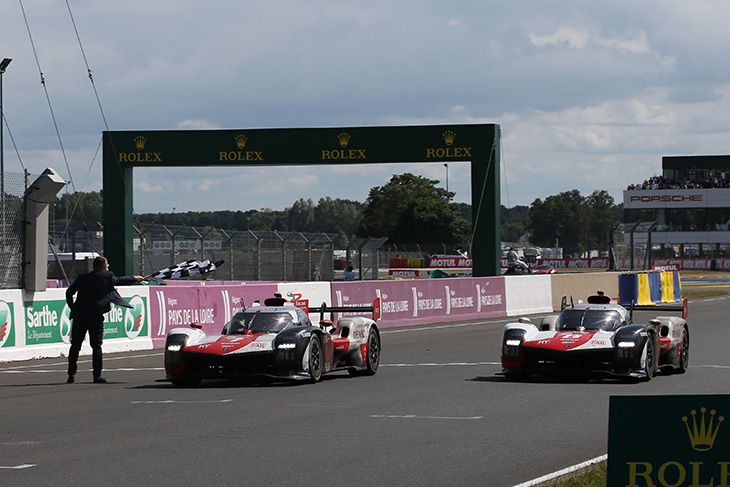
On the car front, the GR010 will continue but we are likely to see some significant changes, as permitted under the ‘Joker’ process of development, to the car seen in the first year of the class.
The 2022 version of the car is set to be revealed in the early new year.
Scuderia Cameron Glickenhaus
Already confirmed by both James Glickenhaus and by LMEM CEO Frederic Lequien is that a single SCG 007 Hypercar will return for a full season in the WEC in 2022, the car set to feature some subtle but important developments in 2022 form.

That confirmation came after strident words from Glickenhaus on the requirement for a fair and equitable Balance of Performance for his team, in particular against the Toyotas – That aspect of the formula appears to be THE factor that will define the team’s willingness to continue.
The team also intend to submit an application for a second car to contest the Le Mans 24 Hours.
DSC understands that all the 2021 team drivers, plus others, have been spoken to as the team close in on their 2022 full season, and potential additional LM24, driver squads.
Alpine Endurance Team
The Signatech-operated team are set to return for the final time with their Alpine A480, Gibson-powered grandfathered LMP1.
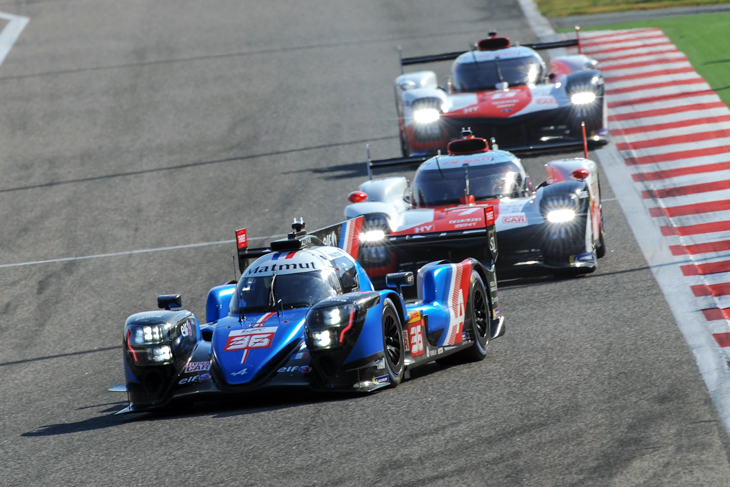
The team added a brand new chassis to the fleet for the Le Mans 24 Hours and have run since then with a larger fuel tank than the original car was capable of accommodating.
Only a single car is set to race and this will be the final year of competition for the car with an as-yet-undefined plan for 2023 ahead of the planned debut of Alpine’s LMDh effort in 2024.
Peugeot Sport
Without a doubt, the biggest news angle of the coming season is the expected return to the international sportscar racing scene from Peugeot Sport, their 9X8 design a sensational departure from the prototype norm in its concept version at launch.

Since then there have been positive updates on engine development and car build, the full 2022 driver squad involved in comprehensive ergonomic and sim development ahead of a planned track test debut due this month.
There has been an isolated media report (in L’Equipe) that a change in the technical regulations has led to a required redesign and subsequent project delay and that this may see Peugeot missing the 2022 Le Mans 24 Hours but with no confirmation from Peugeot of that report.

DSC asked the rule-makers to confirm any changes in the past year that might have led to such a need to redesign and were told:
“Technical Regulations are being formulated through a standardised process. It starts with a dedicated Technical Working Group. Manufacturers are part of these groups and their input is taken into account. Then a working group makes a proposal to a relevant commission that has the authority to approve the regulations and pass them onto the FIA World Motor Sport Council for final validation.
This is a standard process in the FIA World Endurance Championship. There is a dedicated Hypercar Technical Working Group where the regulations and their future evolution are discussed with the manufacturers, both the ones already competing as well as the ones who are set to join the ranks in the future. These regulations are later approved by the FIA Endurance Commission that comprises of the FIA and ACO members.
“The process is fully transparent, and the manufacturers are part of the dialogue, therefore any decision taken is carefully considered so that it does not compromise research and development already undertaken by any of the manufacturers committed to the Hypercar class.”
That seems to indicate – very clearly – that no action has been taken that should, in and of itself, delay the programme.
The current expectation is that a track test debut is imminent, with the two major outstanding points of interest being: When will Peugeot first race the car? and whether or not the car will as presented as a concept, feature no rear wing?
At the Monza press briefing, Peugeot’s senior programme representatives were very clear: “Our simulation data shows that the car works well without the rear wing. We will validate that data in further sim and on-track testing and currently intend to race the car like this. But if the real-world testing does not back up what our sim data is showing us then we can very easily adapt the design.
ByKolles
After an extended period of no news whatsoever coming from the Austrian-flagged team there are now two significant pieces of information available.

Before that though to recap – ByKolles plan to field a non-hybrid car to LMH rules powered by a rebadged Gibson V8 engine.
The car has been in development for almost 2 years and was reported in the late summer to be almost complete with testing set to get underway this month. ByKolles have also reported that they will build two cars.
The latest updates come via two drivers.
Tom Dillmann, associated with the team since 2018, has posted pictures of himself sitting in an unidentified and incomplete LMP-style car that is believed to be the ByKolles, the French driver suggesting he is there for a seat fitting.
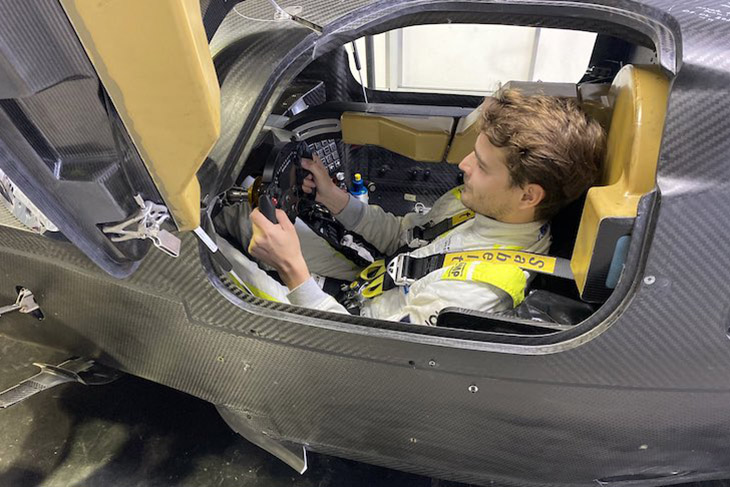
Dillmann was named in April as a test and development driver for the effort together with Argentine racer Esteban Guerrieri.
There’s news too from Guerrieri who reported the following in a recent interview with a local sports radio station in Buenos Aires
“I am in contact with the team. They have been a little behind what they expected in relation to the construction of the car, a few days ago they sent me a photo of the car, that the entire rear of the car is ready. They have planned to put the car on the track definitely in December, we will see if I am there or if I stay in Argentina.
“However, next year there will be development of the car, I think they plan to compete, so the important thing first is that the car is born well, that they put it on the track and that it works well, then work on development.
“The idea is that the car is not only competitive but reliable because they are long-distance races.”
It seems then that despite some challenges, the car is soon to hit the track for its first test!
DragonSpeed
Whilst there has been a proposal based on the return to racing for the DragonSpeed-owned BR1-Gibson as a grandfathered LMP1 that prospect appears to be at a standstill.
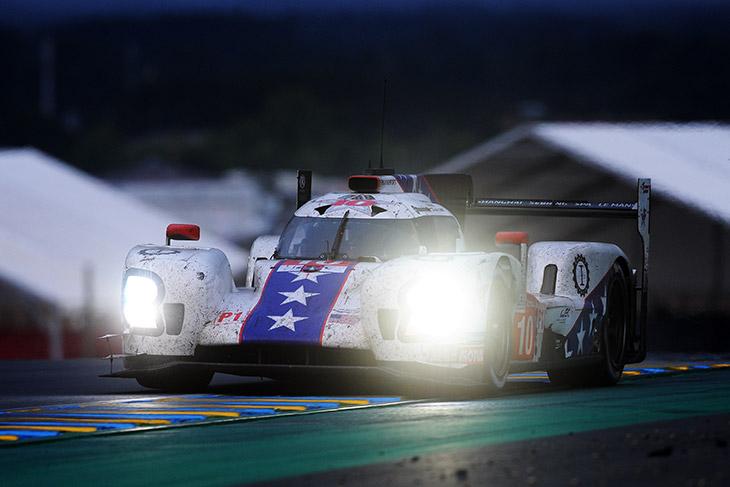
DragonSpeed though are still investigating the potential for a Hypercar programme in the future.
*LMDh cars are eligible in 2022 but no manufacturer is currently expected to enter with such a car until 2023.