

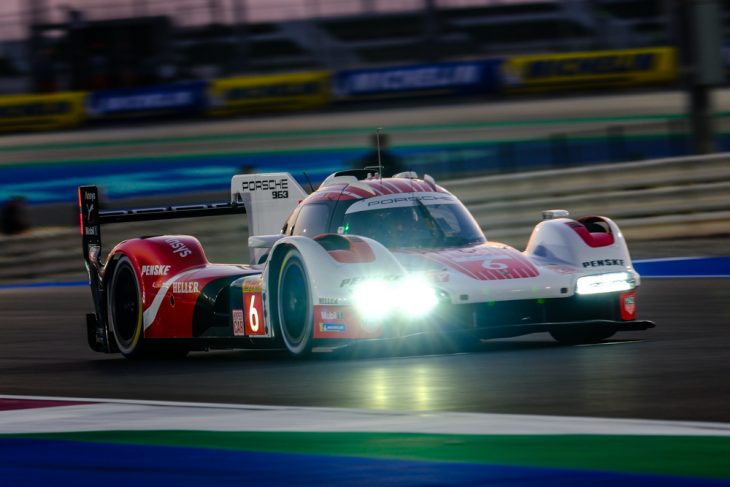
Porsche Penske Motorsport returns to the scene of the opening triumph of its 2024 Drivers Championship winning season this week for the 10-hour ‘Qatar 1812 km’ race on Friday.
The opening race of the 2024 season saw the pair of factory cars split by the #12 Hertz Team Jota car with the factory squad clearly able to get the very best out of the Michelin tyres.
The basis for that result was a test at the Qatari circuit on 29 and 30 November 2023.
“Back then, we left there and had more worries than before,” said Romain Gineste, head of track engineering for LMDh at Porsche Motorsport.
“We had nothing but graining on both days, the tyre surfaces were badly damaged in places. I was sitting on the plane on the way back and thought that it was probably the most pointless test ever. But then we put our heads together and looked for a solution.”
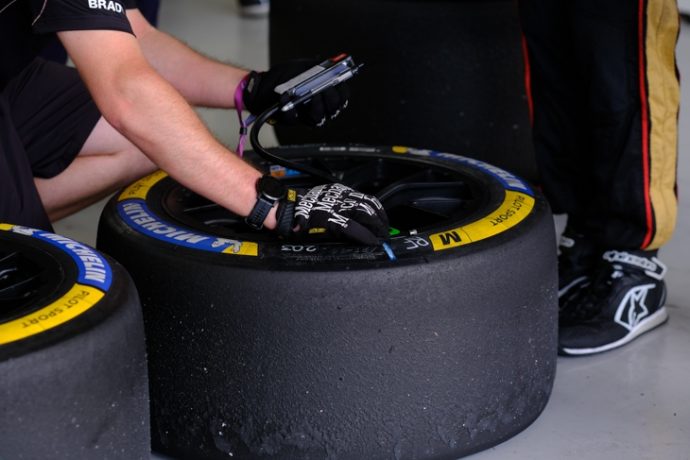
‘Graining’ occurs when race cars overload their tyres – parts of the tread clump together, creating fine waves in the rolling direction reducing the contact area and influencing the tyre’s surface temperature.
During the test on the Lusail circuit, known for its very high grip level, deep grooves kept forming.
“Once the graining has started, you can hardly get rid of it and the affected set of tyres is ruined. Of course, you don’t win that way,” says Gineste. “As a result, you have no chance of completing your desired programme during tests and practice sessions. And in the race, the stint would be virtually over and fast and consistent lap times would not be possible.”
In the following two and a half months at the beginning of 2024, the experts at Weissach and Mannheim found the key to the problem: a modified setup of the suspension kinematics and careful running-in of new sets of tyres.
“With this knowledge, we were a step ahead of everyone else right from the start, because our competitors only gained their experience with graining directly before the race weekend.”
The trick?: Porsche Penske Motorsport and the customer teams had used the practice sessions of the prologue to carefully scrub all sets of tyres for the upcoming season opener.

“Regardless of the track temperature, this allowed for consistently fast laps during the race and also increased the durability of the tyres in particular,” said Gineste.
“Theoretically, we could even have driven three stints with one set. Jota actually did that back then.”
This advantage from the previous season has now evaporated. “On one hand, the competitors now have much more experience from last year’s race. In addition, many teams were testing in Doha in December and January and are therefore much better prepared. On the other hand, during the Prologue, tyres can no longer be scrubbed for the race.”
The regulations have changed for this year: They can only access the tyres intended for the upcoming season opener from Qualifying onwards.
The new start time also means that the season opener in Qatar will be different to last year. In 2024, the 10-hour race begun at 11:00 am local time, now the competition starts at 2:00 pm. The competitors will therefore race until midnight.
“This has a significant impact,” reports Gineste. “Last year, the ambient and asphalt temperatures rose for two hours after the start before dropping by around 15 degrees Celsius by the end of the race. This year, we have already passed the peak of the temperatures at the start and will be racing in the dark for much longer. In other words, we are expecting more constant conditions.”
The falling temperatures can cause surprises at any time, especially in the first five hours of the race up to 19:00, as the front and rear tyres react differently to certain phases of the temperature drop. This has an effect on the vehicle balance.
During the same period, there is also the typical increase in humidity in Qatar, which changes the density of the air and thus reduces the aerodynamic downforce of the race cars. “As we cannot react to these things during the race with setup adjustments, it is up to the driver to adapt to the changed conditions and maximise performance, even if there is a possibility of increased understeer,” Gineste adds.
When setting up the car, the engineers already have these developments in mind: “They have to anticipate the track conditions in the final hours of the race and set up the Porsche 963 so that it is particularly competitive in the final stints when the decisions on victory and positions are made – without making too many compromises in the first phase of the race.”


