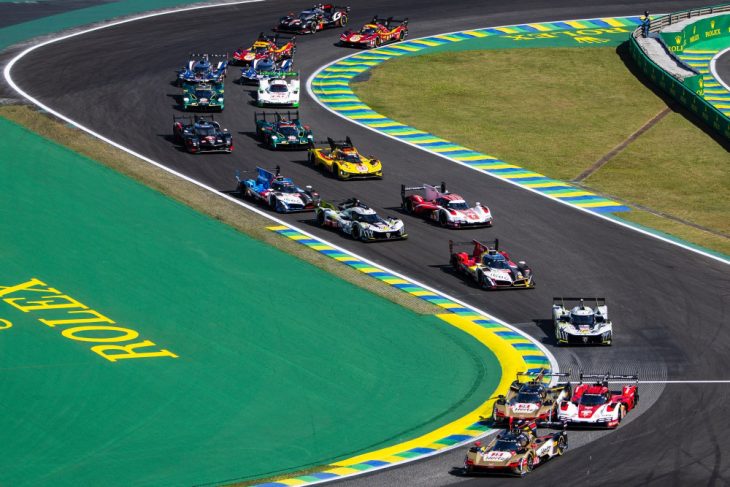

The potential for a shift in the FIA WEC’s Hypercar class from a ruleset that welcomes both LMH and LMDh-spec prototypes to one that is scaled back to a single platform has become the talking point in the paddock in recent months.
The push to introduce a streamlined set of regulations by the end of the decade is gaining significant momentum, alongside the potential for further changes to the Balance of Performance system. Why now?
On and off the record, the manufacturers in play are gradually becoming more vocal in support of changes to the rules and regulations. It stems from frustrations attached to the 2025 season, which has been impacted by a wave of negativity concerning the top category’s revamped BoP system.
The new methodology, which sets the BoP for races outside of Le Mans by using data gathered from a rolling average over multiple races, taking into account both a car’s 10 fastest laps and the average of its quickest 60% of race laps, has received its fair share of criticism, from manufacturers, teams, drivers, media and fans.
The intention of BoP in the top class was to create close, hard racing between the manufacturers involved, without serving as a crutch to lean on for factories with a substandard car. Yet all too often this year – even the rulemakers would quietly agree – it has failed to meet its objectives.
The problem is that by its very nature, BoP cannot keep everyone happy, even though it exists principally to reduce costs and make the competition ‘fairer’. Someone always has to finish at the back, and after six, eight, 10 or 24 hours, the larger the field, the more difficult it is to manage aspiration and expectation. You could argue, effectively, that the job of the FIA in balancing such a deep field with such variety in car types has become an almost impossible task in the current era.

Thus, the teams up and down the pit lane that have struggled to perform consistently, off the record (due to the rules in place that prevent public statements and lobbying), clearly feel the levee has broken, and something has to give. What the scope and scale of the change looks like is still up for debate, but the picture is becoming clearer as we move towards the end of the 2025 season.
The most pressing topic concerns the implementation of Balance of Performance, as well as its short and long-term future. In recent months, suggestions were made to DSC that a full overhaul of the current system is being discussed, potentially to a simplified solution in time for the 2026 season.
But as Lone Star Le Mans approached, the potential for BoP to be scrapped entirely in favour of something new to balance the LMDh and LMH cars currently racing by the end of the decade also entered the chat.
What could this look like? Off the bat, DSC understands that a hard cost cap, similar to Formula One, has not been on the table in discussions between the factories and rulemakers.
In balancing two platforms, we tried, but we failed. That’s clear
Instead, a manufacturer source told DSC, “one idea could be to find a smart way on the Joker side to say that the quickest car cannot be developed, while the slower manufacturers are invited to spend Joker upgrade tokens to get closer. I think this framework, on paper, is possible. Some of us would be happy to race without BoP, to keep costs under control. It’s possible by 2030 to get rid of it (BoP), but it’s a long way to go.”
Another senior paddock source added, “I am hearing about a success ballast kind of thing? Whether that’s the fastest car be frozen and the slowest car be given jokers, which would be slow, or a faster weight system. This is because what we’ve tried in balancing two platforms, we tried, but we failed. That’s clear.”

A meeting in Paris on September 12th, which saw the FIA, ACO, IMSA and each of the manufacturers involved come together, laid out some important principles for the future.
It was a meeting without an agenda, which was more of an open forum. It has been described to DSC as “overwhelmingly positive” by a key voice, with the vast majority of the manufacturers involved apparently seeing eye-to-eye on the key topics that were brought up.
A vote was cast on BoP’s future, and all but one of the Hypercar manufacturers voted in favour of keeping it going forward. Any plan to scrap it entirely has been shelved, for now at least.
A vote was cast on BoP’s future, and all but one of the Hypercar manufacturers voted in favour of keeping it
With that in mind, it appears that tweaks will be made to the system for next year, but DSC believes they will not be sweeping.
The other key topic discussed was the potential for a single platform to be introduced to Hypercar. It’s a potential solution that has morphed from what appeared to be a pipe dream when Porsche first discussed it with reporters back in Qatar, to something that now seems inevitable.
To retain the majority of factories currently competing and in the process of joining, as well as attract new ones into the 2030s, there’s a common belief that some form of single platform should be introduced in time for 2030. This would coincide with the first season under the latest Hypercar rules extension that runs until the end of 2032.
It’s a truly complex debate because there are so many strands to it. But, in simple terms, what could this realistically look like in practice? Currently, a ruleset which essentially serves as an evolution of LMDh, potentially with greater freedom for manufacturers regarding chassis suppliers and the hybrid system used, is believed to be the most likely solution.
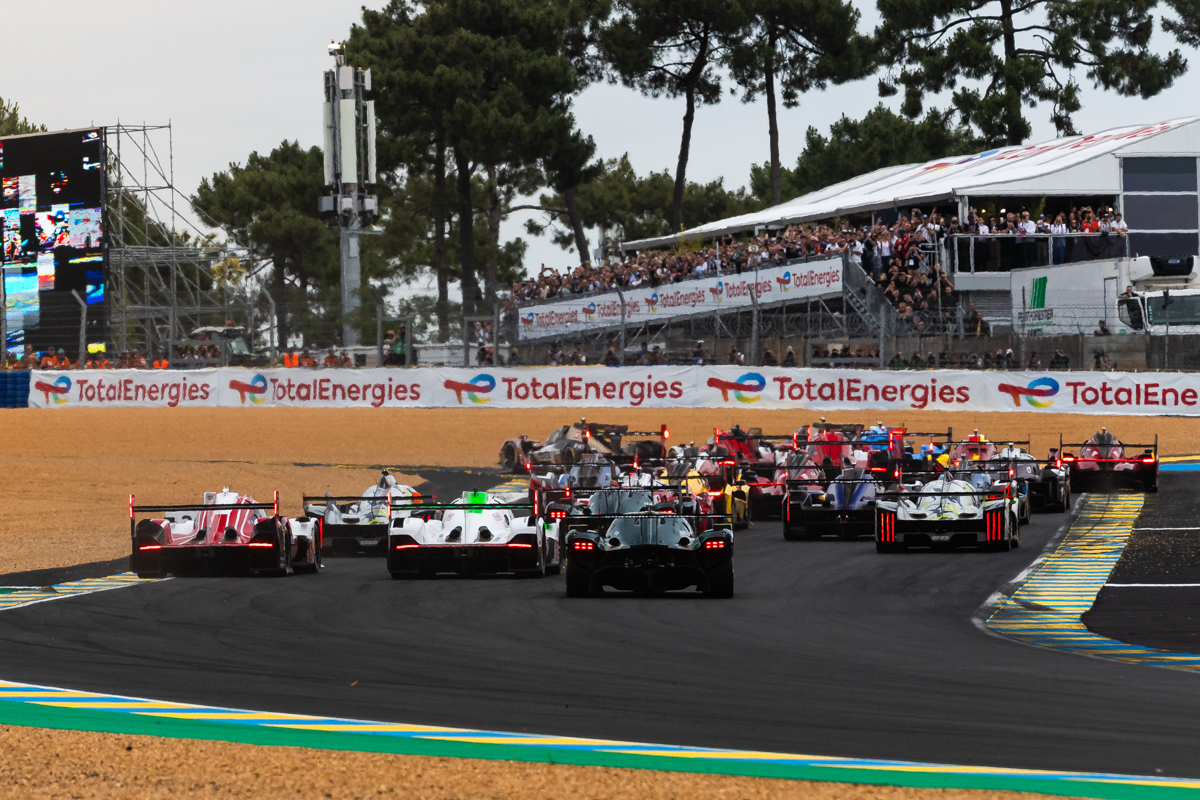
Theoretically, this could enable the current LMH manufacturers to design their own chassis, but restrict them to bringing a rear-mounted MGU if a hybrid was the chosen route. Whether or not each factory would need to utilise a spec hybrid spine is up for debate, but in general, by removing the variables thrown up by a field featuring two and four-wheel drive prototypes, the belief is that the Hypercar class would be significantly easier to balance. Crucially, whether or not it would be feasible for LMH factories to modify their current cars to meet these regulations instead of designing brand new ones is also not yet clear. It’s early days.
This is something that a technical director from a prominent Hypercar manufacturer discussed – anonymously – with reporters during the CoTA weekend.
“I don’t see that (moving to a ruleset which placed more limitations on the freedom to produce a bespoke chassis like LMH does now) as a big concern for convergence,” they said. “The main point where we should find common ground is more related to ERS, the front or rear MGU and how to use it. I would say that the chassis is not a problem at all. We have to listen to all the players around the table.”
Firm decisions need to be made soon, because the current state of limbo is making it increasingly tricky for the factories to plan for the future.
Peugeot, for example, is planning to bring a new car in time for 2027, and this is believed to be LMH-spec. Thus, if the rules require each manufacturer to bring an LMDh for 2030 onwards, or something close to it, then it may be limited to just three seasons with its new prototype. If it still wishes to continue by then, it could be forced to either heavily modify it or change its concept again.
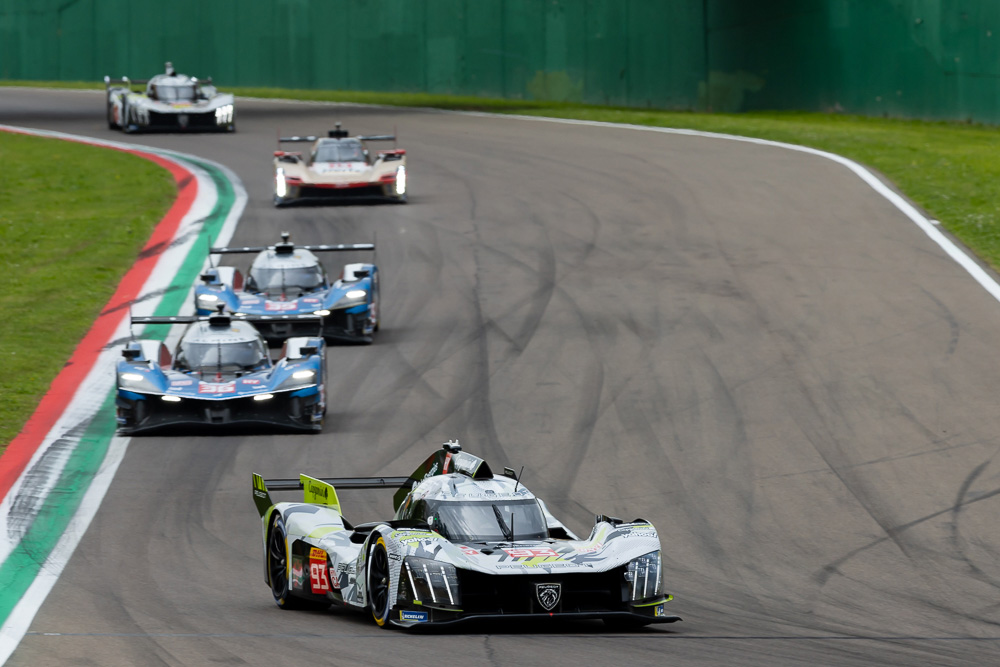
A three-year programme with a car may not seem, on the face of it, unreasonable in modern motorsport terms. However, we could very easily find ourselves at the 2030 season opener with some of the LMDh manufacturers on the grid with a car that debuted in 2023, racing against Peugeot’s third car of the current era. With so much of the core debate focused on cost saving, this is notable.
And Peugeot is far from the only OEM keeping an eye on the future and the impact it will have on the roadmap for its programme.
Cadillac, like BMW, is working on significant aero updates for its car for 2026. It appears that the V-Series.R will evolve in time for next season, after every car visits the Windshear Windtunnel for a fresh homologation at the end of the year. Alpine also told DSC recently that it has plans to work on the A424’s aerodynamics soon.

Reigning Manufacturers’ Champion Toyota, which historically has bought into the FIA WEC’s top class regulations because of the freedom it allows it to develop hybrid technology, is chasing clarity too. Frustration within the camp has been mounting amid a hugely disappointing season (by its own lofty standards) with the GR010, in which it feels that the BoP changes it has been dealt have prevented it from fighting to defend its title and claim a Le Mans victory.
The Japanese brand’s case is potentially unique too, because it holds a publicly declared active interest in the hydrogen regulation set, which has suffered a series of delays. The current published plan is for it to come into play in 2028, close to the time when the new-look Hypercar car class may debut.
“The single platform or a different platform is not the biggest issue we have,” Kazuki Nakajima, the vice chairman of Toyota Gazoo Racing’s WEC programme, told DSC. “There is more we can do under the current regulations with two different platforms, but we don’t see a big advantage or disadvantage of two platforms. I wouldn’t say it’s perfect yet, but I think it’s a rather minor topic compared to some other topics!”

There’s a long way to go yet before we have a firm idea of what the state of the FIA WEC’s smash hit Hypercar formula looks like for the 2030s. But it’s encouraging that we sit here in 2025, with sensible discussions ongoing and future planning in full swing, with years to play with.
There are no guarantees it will work, but it is exactly what’s required to achieve the goal of building on the extraordinary era for sports car racing that we are living through and securing its future.
Images courtesy of DPPI, Andrew Hall, Paul Foster & Keith Rizzo