It’s been a while since we featured an interview by Mike Cotton on DSC, and that’s been too long.
Mike’s depth of understanding of what makes the racing industry tick has given him a real appreciation of the massive contributions made by some truly unsung heroes, many of them all but unknown to even the keenest of race fans.
One of these is the subject of Mike’s latest interviews. If you haven’t heard of Graham Humphrys then be prepared for your jaw to hit the table as you peruse the story below.
Remove Mike’s wonderfully crafted words and distill the number of road and race car legends that Graham has been involved with and you’ll stumble across more than the odd favourite – So make yourself a coffee, or pour yourself a beer and drink this one in!
As curriculum vitae ago, that of engineer Graham Humphrys looks like a “who’s who” in the British racing car industry. He has had a hand, an arm in some cases, in several Le Mans winners notably McLaren, Chrysler, BMW, Aston Martin, Spice and Ecosse, worked for Aston Martin Lagonda for some years, and was recently chief designer of the Bentley Continental that’s making waves in GT3, in Europe and in America.
If you ask him which of his Le Mans successes was the most satisfying, he will talk about engineering the Ueno Clinic sponsored McLaren F1 GTR that won Le Mans in 1995, a race in which JJ Lehto played the leading role with superlative wet-weather driving, ably backed by Masanori Sekiya and Yannick Dalmas.

McLaren Cars were presented with an opportunity to enter a Japanese sponsored car at Le Mans. “McLaren could not run the car in competition against their customers, so they asked Paul Lanzante to run it” Humphrys recounts. “Paul had an excellent team but no Le Mans experience, so I was asked to engineer the car.” Under the supervision of Jeff Hazell, McLaren’s high mileage test car was brought up to the right specification and packed off to Le Mans. “Our preparation was not without its problems. We made a late call to change the engine, and in the early hours of race morning we were running up and down the airfield runway. There was a problem with the gearbox in final qualifying when we found that a selector fork was bent. During the race we like other Mclaren experienced water in the selector mechanism. We diagnosed it quickly and overcame gear selection problems.”
Of course at the start there was no thought of winning the race. They were up against the Gulf and West McLarens that were dominating the BPR global endurance series and a number of prototypes, including the Porsche powered Courage with Mario Andretti and Bob Wollek on the driver strength. “Our aim was to try and win the GT category, but there were long periods of rain that spread the field on Saturday evening. Our car was moving up during the night, with JJ driving unbelievable stints in the rain. Courage had a much faster car but Andretti had damaged it on Saturday night, and the car suffered several delays. The Harrods McLaren led but dropped back with clutch and gearshift problems, and eventually we beat the Courage by a single lap. It was very, very special.”
After running the Parabolica long tail Mclaren through 1997, Humphrys received a call from his old friend Pierre Dieudonné, at Oreca, asking if he could run a Viper at Le Mans.in ‘98 “They were under pressure from Chrysler to run a third car for David Donohue, Justin Bell and Luca Drudi, but they were only staffed to run two cars in the BPR series. We were definitely the third car, there was not a dedicated base station radio set for us and the crew were temporary. The chief mechanic was ex Larrousse F1 and his experience was a huge help. I spoke with Ken Rumbold of MRTC, he knew that Toyota had a spare radio in their truck, and he managed to borrow it for the race, as well as finding other missing equipment and that was the key to our success.
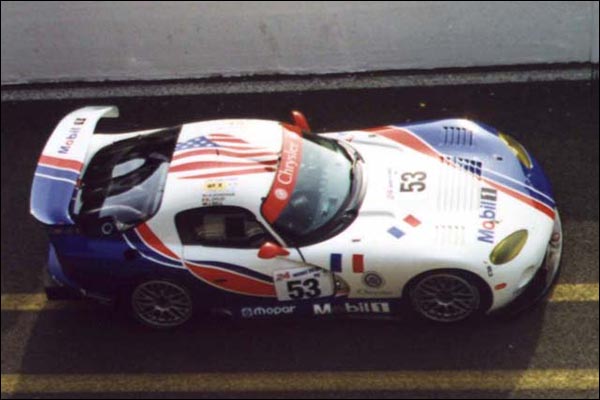
“Again, it was a wet-dry-wet race and with constantly changing conditions, it was vital to make maximum use of the radio. Whilst not being the fastest car, with two-way weather reports we were able to minimise unnecessary stops and make the best calls on tyre choice. This was crucial to winning the class.” At the finish, Donohue, Bell and Drudi claimed 11th overall and a fine victory in GT2, five laps ahead of Olivier Beretta who finished 13th in the team’s intended lead car.
Immediately after the ’98 Le Mans Humphrys was hired as chief designer for Williams Motorsport Limited, with the brief to re-design the V12 Le Mans sports car that had proved disappointing in the 24-hours, off the pace and stopped by wheel bearing failures. The ‘98 cars (below) had been designed and built by Williams so there was plenty of detailed knowledge. The ‘99 car was all new and included many lessons learned from the ‘98 car, such as redesigned side-pod mounted air intakes to reduce drag, frontal area and improve engine cooling. The other notable feature was the single roll hoop behind the driver’s head, using a loophole in the ACO’s regulations that Audi and Reynard, to name but two, had not perceived. John Russell was chief engineer and Peter Stevens (former McLaren designer) “did the styling interface with BMW”. BMW Team Schnitzer won the Sebring 12-hours and the team was set fair for Le Mans.
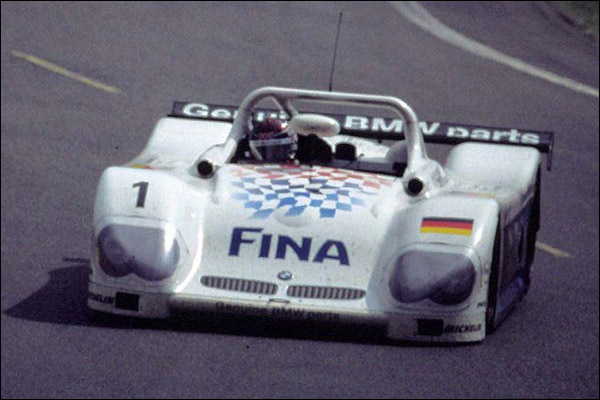
“Following the pre-season development programme the cars were extremely reliable. It was a really enjoyable experience designing and developing these cars for Le Mans with the Williams team and Charlie Lamm’s Schnitzer team. Sunday morning they were running first and second, led by JJ Lehto with Tom Kristensen and Jörg Müller in what we called ‘the giants’ car’, the pace setter.” Reliable yes, in all but one respect. Attacking the Porsche Curves, Lehto had the awful experience of losing control and crashing heavily. “The rear damper top became detached and the suspension collapsed, immediately. Unfortunately the errant damper punched into the throttle linkage, forcing it open.”

Jo Winkelhock, Pierluigi Martini and Yannick Dalmas won the race in the ‘jockeys’ car and BMW Team Schnitzer then went back to America to claim victories in the inaugural American Le Mans Series, with Humphrys and a small support crew from Williams. Lehto and Steve Soper won at Sonoma, the Petit Le Mans and Las Vegas. “Soper did most of the setting up and Lehto would jump in and claim pole position. Steve would often say ‘I do all the hard work and he gets all the glory’, they really were a fine pairing.”
From Jaguar to Hesketh
Graham Humphrys always wanted to be an engineer, preferably in racing. During his career he has worked for Jaguar and Aston Martin on design, interspersed with engagements at Hesketh Racing, March Engineering (design engineer), Spice Engineering (chief designer), Lola Cars (design and track engineer), Ray Mallock Limited (chief designer), Williams Motorsport (chief designer), Aston Martin Lagonda Limited (chief engineer, motorsport) and Bentley Motors (chief designer, motorsport). It would be interesting to know if any engineer has had more varied, responsible positions anywhere in the industry. And at the age of 63, he ain’t finished yet!
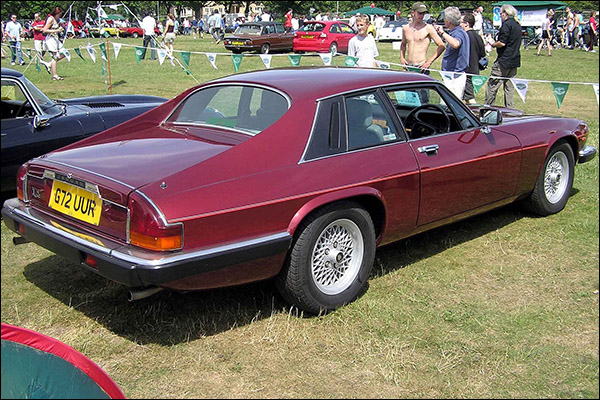
From school Humphrys secured an apprenticeship at Jaguar Cars, working in Browns Lane, and at the Daimler works in Radford. He was involved primarily in design and development. “I worked on the XJ6, the V12 E-Type and the XJS. I learned a lot and thoroughly enjoyed my time at Jaguar Cars.”
In 1974 he applied for a post with Hesketh, assisting Harvey Postlethwaite with the design and development of the 308 Formula One car raced by James Hunt. Based at Lord Hesketh’s home in Easton Neston, Humphrys stayed with the team until Hunt left at the end of 1975.
From there, he joined Aston Martin Lagonda Limited at Newport Pagnell, and was responsible for the chassis design of the Lagonda, the William Towns designed four-door model. Once the Lagonda was in production Humphrys returned to motorsport, joining March Engineering in 1979 as design engineer working on the 82G, the Sports 2000 and Indycars. He also assisted Ralph Bellamy and Nigel Bennett at Ensign in F1. In 1983 he assisted Bennett at Theodore co-designing the ‘83 Indy car and designer of the T84 Indy car.
At about this time he helped to develop the Bovis sponsored Nimrod Group C car which was raced by Viscount Downe’s team. Despite being overweight and underpowered it raced well enough in the hands of Ray Mallock and Mike Salmon to finish seventh at Silverstone in May 1983, behind a batch of Porsche 956s. It performed well at Le Mans, but retired with an engine failure on Sunday morning.

His relationship with Mallock resulted in being invited to design the Ecosse Group C2 chassis, the car then performing very strongly against Gordon Spice’s Tiga based team in the mid-1980s. Even at this stage, 10 years on, Humphrys was still able to work out of an office at Easton Neston, but finally moved out in September 1985 when he was offered a job at Spice Engineering.
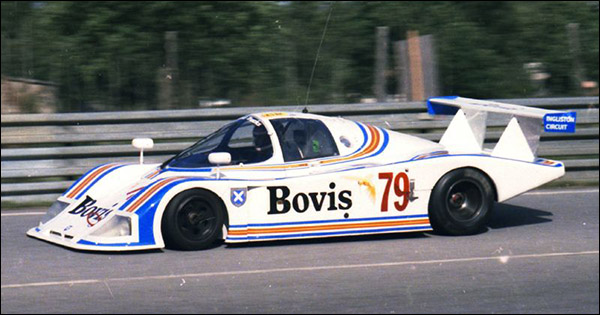
“Jeff Hazell (Spice director) said I should stop messing about and offered me the job as chief designer.” Spice was then running a heavily developed Tiga C2 but was ambitious to race his own car, and it was Humphry’s brief to design this car, the SE86.
The Spice SE86 had a honeycomb aluminium chassis and wind tunnel honed bodywork, installed in three sections, and it was immediately successful, enabling Gordon Spice and Ray Bellm to win back-to-back C2 titles in 1986 and in 1987 these following-on from Spice’s titles, with the Spice developed-Tiga chassis, in 1984 and ’85. So, the third and fourth titles in succession, in cars bearing his name, were a source of great pride to the team owner. General Motors had made a substantial contribution to the programme, ordering three new Camel Lights cars for the IMSA series, these to be powered by 3-litre Pontiac engines. John Cafaro of Pontiac styling helped create the Fiero appearance of the ‘86/7 cars.

Spice’s race cars were powered by Ford Cosworth DFL engines, sufficiently powerful and reliable to win the C2 class on no fewer than 22 occasions in 1986 and 1987, from 35 starts. Six second places and only four retirements was a great testimony to the car’s design and construction, and the efficiency of the team. Incidentally the Spice SE86 was timed at 350 km/h (217 mph) on the Mulsanne Straight, a speed that some C1 cars struggled to beat! This was achieved by Nick Adams in Hugh Chamberlain’s 4-cylinder Hart turbo car.
Humphrys designed an update for the 1987 season, when the weight was close to the minimum at 708 kg. Fermin Velez joined Spice at the wheel of the SE87, continuing the success story with Spice’s fourth title, and placing sixth overall at Le Mans. The SE88 was a completely new shape conforming to new regulations, with a larger flat under floor and lower venturi. Despite these changes, supposedly to slow the cars, the SE88 was three or four seconds faster per lap at most circuits. Ray Bellm returned to the team and he and Spice won C2 seven times in nine appearances, including victory at Le Mans, and were beaten only once, at Silverstone, by Ecurie Ecosse.
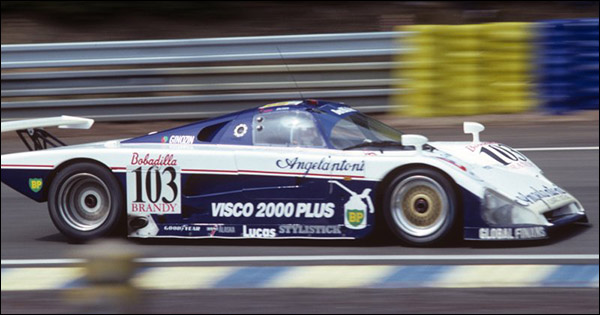
The next evolution was the SE89, which was moved up to C1, the ‘senior’ category up against Mercedes, Jaguars, Porsches, and the new Aston Martin AMR1. The larger capacity 3.6 litre Ford Cosworth DFZ was adopted and the two-car team included Spice, Eliseo Salazar, Wayne Taylor, Thorkild Thyrring and Tim Harvey. Leading results were much harder to come by, naturally, but their best, perhaps, were a fighting fourth overall at Jarama (Taylor and Thyrring), fifth at Silverstone and fifth again at Spa-Francorchamps.

Donington Park offered the Spice team its best chance of an outright victory, denied by a mechanical fault at the last pit stop. The East Midlands circuit suited the agile Spices very well, and were in the leading bunch into the last hour. “We could have won” reckons Humphrys, “but for the ECU to shut down due to low voltage following the last pit stops. The engines fired, only to cut out when the cars regained the track. The alternators were driven off the driveshaft, requiring a minimum track speed to charge, the ECUs saw low voltage and shut down. After the race, both cars started on the button!”
Gordon Spice retired from racing but the team continued into 1990, and Spice Engineering into 1991, when Group C eventually foundered. By then Humphrys had designed a futuristic Group C car, the car was ahead of its time with delta pods and a front wing. “It was too big a gamble and with Group C failing there was no market. During his time at Spice over 50 cars were built with many engine/gearbox and body combinations for, GTU/GTS/Camel Light/GTP/C1 and C2.
The Dutchman, Charles Zwolsman, and his Euro Racing team, ran two Spice C1 cars and Humphrys was put in charge of their operation. In fact Zwolsman and Cor Euser achieved some fine results in 1991 in the events shortened to 430 kilometres: fourth at Suzuka, fourth at Monza, fifth at Silverstone, fourth at Magny Cours and fourth again in Mexico City placed the Dutch Spice team fourth in the FIA Sportscar World Championship behind Silk Cut Jaguar, Peugeot and Mercedes.

Zwolsman switched to Lola chassis, the T92/10, for the 1992 season, the last-hurrah for Group C, and Humphrys became Lola Cars’ design and track engineer for the 92/10 programme At the end of ‘92 Group C was finished and Humphrys was transferred to various Indy car projects, notably the Toyota, Honda and Buick programmes.

There is a saying “what goes around, comes around” and this applied when Ray Mallock invited Humphrys to become RML’s technical director, in the autumn of 1994, during the Cavalier and Vectra period. Clearly the RML prepared Vectra was the best of the 1995 season, John Cleland winning the BTCC handsomely (pic below from Peter Still) , his successes including a ‘triple’ at Donington Park, pole position, fastest lap and victory in both races of the afternoon. Humphrys also spent time in Belgium with Pierre-Alain Thibaut’s Stella Artois team contesting the Belgian Touring Car Championship, the cars badged as Opels.

RML switched to run the Nissan Primera touring cars in 1996, when the Nissans came good but Humphrys left RML at the end of 1996. His fresh taste of Le Mans, midway through the 1995 season, left him feeling that perhaps his career was best served in endurance racing, rather than in touring car ‘sprints’. He left to run the Parabolica long-tail McLaren through the ‘97 season.
The big outings with McLaren, Chrysler and Williams were satisfying, and why not? After undertaking several freelance consultancy briefs Humphrys returned to what became his spiritual home, Aston Martin Lagonda Limited, from mid-2000 until 2009. As chief engineer, motorsport, he had a wide brief, and he became responsible for a number of interesting projects, including working closely with the Stephane Ratel Organisation and the FIA.
“Ford encouraged Aston Martin to be their GT brand while Jaguar was in Formula 1, and we looked at developing a GTS Vanquish.” AML had a customer who wanted a racing Vanquish and the GTS class was the only viable option but then BMW made a V8 engined GT car which created a furore that resulted in the demise of GTS. The DB9 and the V8 were under early development and we looked at all the options, including a prototype.”
One option was the study of a mid-engined ‘supercar’ dubbed AMS-1, which went through the study and early design stage, but was not built. AMS-1 would have had a carbon monocoque, two seats, and the twin-turbo V8 engine would be located ahead of the rear wheels. It would cost in the region of £1 million, and a small production run was proposed.
It’s fascinating to think that Aston Martin might have joined the supercar ranks, a successor in spirit to the McLaren F1 GTR, perhaps, but the project was shelved as the DB9 was nearing production and would make an ideal GT1 car. At this point AMR was formed and George Howard-Chappell created the Aston Martin DBR9 which was unveiled in Gaydon in November 2004, and would spearhead Aston Martin Racing’s return to top-level racing the following season. Two cars would race at Sebring, and then at Le Mans, and the plan was for 12 ‘works’ cars to be run by factory-backed teams in major international GT series, and in addition, up to 20 cars would be built for sale to private race teams, and/or collectors.

With carbon fibre panels and other weight saving measures the DBR9 reached the 1,100 kg minimum weight for the GT category, and it was powered by Aston Martin’s 6-litre V12 engine developing 600 horsepower. It was immediately successful, winning the Sebring 12-hours on its debut, this car entered by Prodrive.

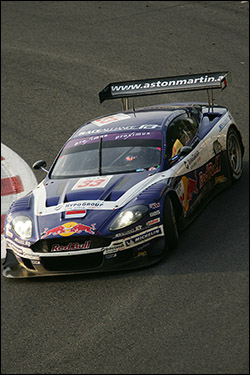 As well as Prodrive, representing Aston Martin Racing, other factory supported teams in 2005 were run by Larbre Competition and BMS Scuderia Italia. Team Modena, formerly Cirtek Racing, also ran a DBR9 in the first season, and in later years customer teams included Jetalliance (right at Spa in 2006), Phoenix Racing, Barwell Motorsports, Gigawave Motorsport, Bell Motorsports, Strakka Racing and Team Nova. Altogether, 17 DBR9 chassis were produced, 10 for factory teams and a further seven for customers.
Aston Martin Racing was foiled by Corvette Racing at Le Mans, in 2005 and in 2006, but claimed victories in the American Le Mans Series at Lime Rock, Miller Motorsports Park, Mosport, the Petit Le Mans and at Laguna Seca. The French Larbre team won the Le Mans Endurance Series’ GT Teams Championship in 2005. With progressive development, the Prodrive Aston Martin team beat their nemesis, Corvette Racing, at Le Mans in 2007 (the cars numbered 007 and 009). A year later the Prodrive Aston Martin, now in Gulf Oil colours, and again 009, repeated its Le Mans victory, a huge success for David Brabham, Darren Turner and Antonio Garcia. By way of celebration of early successes, Aston Martin produced a closer to production version dubbed DBRS9, aimed at the FIA European GT3 championship, with 550 bhp and a little heavier, at 1,280 kg.
Meanwhile, Aston Martin developed a GT4 version of the Vantage V8, N24, the first of which Aston Martin CEO Dr Ulrich Bez competed in the Nürburgring 24-hours. “It was incredibly reliable” says Humphrys, “the stability control, and excellent radio system again proved a real advantage in bad weather conditions.” The Vantage N24 was used as a benchmark for GT4 Balance of Performance. In 2008 Aston Martin announced a GT2 version of the Vantage, raising the power from 380 to 420 bhp and lowering the weight from 1,350 kg to 1,250 kg. This was a golden era for Aston Martin, producing iconic GT race winners and selling V8 and V12 production based cars in good numbers for GT1, GT2, GT3 and GT4.

Humphrys left Aston Martin in July 2009 to establish his own company, GT1 Design Limited, with a number of commissions, one of which was a feasibility study of a Russian sports car to make a GTE racing car. A return to AML to design and develop the V12 Vantage and 4-door Rapide race cars for the Nürburgring was another interesting project.

By far more revealing, though, is Humphrys’ design work on the Bentley Continental GT3. How did that come about? Through contact with his old mate John Wickham, whose associations with the Crewe company went back to the Bentley Le Mans winner in 2003. “We talked about Bentley over a coffee, and later he said that Brian Gush wanted to talk to me about what might be achievable with the Continental. We met, and I recommended a feasibility study to see what was possible. It looked as though it could work, and I was appointed as chief designer to gain FIA approval for the proposed design.”

This is explained by the complex requirements of Balance of Performance, which include power-to-weight and aero targets. “You have to be inside the windows of BoP, otherwise you cannot homologate.” There were substantial hurdles to be overcome on the Bentley Continental, with a kerb weight of 2,290 kg, a tonne in excess of the target minimum of 1,300 kg! First, it was decided to race with the V8 engine, rather than the more powerful, but heavier W12. The four-wheel drive system was removed. Doors were replaced by carbon fibre weighing 7 kg, rather than the standard 57kg. Electrically operated and heated seats were removed, replaced by one carbon race seat. The body shell was lightened and some racing parts were fitted, although some standard items were retained, according to FIA regulations. The V8 engine was restricted to the regulation 576 bhp and aerodynamics developed to meet the BoP window requirements.
“M-Sport has the best facility I have seen outside Formula One” says Humphrys approvingly. First he spent eight months at Crewe, then 18 months in Cumbria working with Christian Loriaux and his team, seeing the project to fruition, tested and shown to be fully competitive. The unthinkable, a lightweight racing version of the Bentley Continental, burst upon the world, both in Europe and in the States.
Today, Graham Humphrys is busy as ever, GT1 Design working on exciting future projects and he has no thought of retiring.
Michael Cotton