Michael Cotton has been busy on DSC’s behalf once again and this one is a long-awaited treat.
It turned out to be quite an epic, so epic indeed that we are presenting this in three parts, there’s no other way to present the extraordinary, but for many, sadly little remembered, achievements of John Fitzpatrick!
Fitz. You just had to drop this four-letter name into a conversation and everyone knew who you were talking about. John Fitzpatrick, who was one of the most versatile, and successful drivers of saloon and GT cars in the 20th century. He was a Cooper Cars ‘works’ driver in the British Saloon Car Championship at the age of 21, finishing runner-up to Jim Clark in his Lotus Cortina, and clinched the title in a Broadspeed Ford Anglia at the age of 23.

The Birmingham driver’s career was well and truly launched, and went through three phases. First, as a sought-after touring car driver signed in turn by BMC, Ford Cologne, Schnitzer BMW and Jaguar, then as a Grand Touring specialist, winner of three Porsche Cups with the Kremer, Loos and Barbour teams, and eventually in the 1980s as a Porsche driver-entrant in the World Endurance Championship, IMSA Camel GT series, and the Deutsche Rennsport Meisterschaft (DRM). Along the way, he won the Daytona 24, the Sebring 12-Hours, the Bathurst 1,000, and a success that gives him a lot of pride, beating the Rothmans-Porsches at Brands Hatch in 1983, thanks to an epic drive by Derek Warwick in the John Fitzpatrick Racing Porsche 956.
Let the record speak for itself. In the space of 22 years Fitzpatrick competed in 262 races. He finished 188 of them and won 45. He also finished second or third 68 times, making a total of 101 visits to the podia, so 38 per cent of all his contests earned a prize. That’s a remarkable record taken over such a long period, in such a variety of machines.
Fitz, I’ll call him that because everyone did, was very well funded in the early 1980s by a wealthy enthusiast by the name of Jerry Dominelli, whose sponsorship took the form of J David on his Porsches in America and in Europe, notably at Le Mans. It was a considerable shock to Fitz, and investors, when Dominelli went on the run late in 1983, was arrested and accused of mail fraud, the indictable offence covering pyramid selling, the selling of ‘too good to be true’ investments, and he served 15 years in a penitentiary.
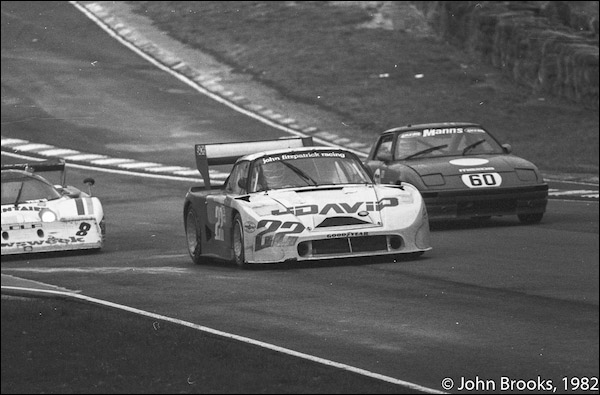
While it lasted, the sponsorship was golden, Fitz winning the Los Angeles Times Grand Prix IMSA event three times in four years, and many other victories too, the period marred only by the death of Rolf Stommelen at the wheel of the JFR Porsche 935 at Riverside. Fitz, David Hobbs and Derek Bell won that event, going to the podium not knowing that their star German driver had crashed fatally when the already damaged rear wing collapsed.
Saloon car star
John Fitzpatrick left school in 1959 at the age of 16, showing great promise as a golfer and aiming to turn professional as soon as he got down to scratch. But then he broke his arm badly by falling out of an oak tree – collecting acorns, to plant on the golf course and had to leave the links for months. He got busy improving the basic Mini 848 that his father gave him on his 17th birthday after promising never to smoke tobacco or ride a motor bike. Ralph Broad was a friend and neighbour, tuning the engine, and Fitz started winning BRSCC club races, once so clearly that Nick Syrett pointed him straight to the scrutineering bay, where the cylinder head was removed and the capacity checked.
Broadspeed (Fitz and Ralph hatched the name together) entered the young talent in three rounds of the British Saloon Car Championship in 1963, driving a Broadspeed Cooper S 970. He scored points straight away, so impressing Sir John Whitmore that he recommended him to John Cooper, and a contract followed. Teamed with Paddy Hopkirk, he won his class first time out, and a string of class wins placed him second in the BSCC series. He returned to Broadspeed in 1965 to drive their Cooper S 970, again, winning the class three times. It got better, as Broad was contracted to Ford to run a Ford Anglia in the BSCC. Fitzpatrick drove the lead car, with Anita Taylor as his team-mate, and won the British saloon car title at his third attempt. A year on, he was runner-up in the BSCC.
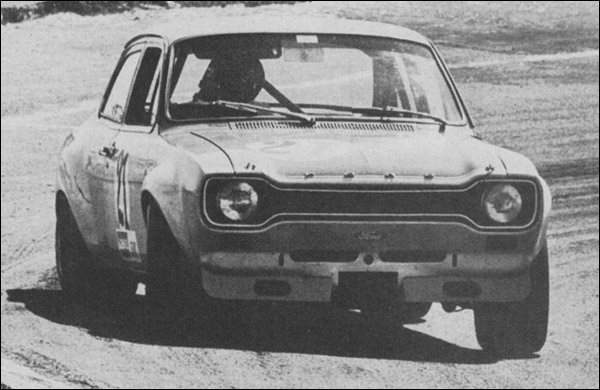
Fitz maintained his ties with Ralph Broad for another four years, contesting both the British and European touring car championships in the new Ford Escorts. When the car was homologated in 1968 he claimed four 1-litre class wins on the trot, also racing the Anglia in Europe.
“Stuart Turner was in charge of BMC’s competitions in 1964, and he helped my career enormously when he moved to Ford. When we were running Escorts, Ford Cologne were running the Capris and they wanted to compete in the lower class, where Alfa Romeo were competing, to deprive them of points.”
So, in 1971 Fitz drove for Ford Cologne in an Escort prepared by Broadspeed, and in the space of two years he achieved no fewer than 15 class wins in the British and European saloon car championships. He won the Austria-Trophy at the Salzburgring in a solo drive, and finished fourth at Monza with Jochen Mass in an Escort 1600 RS. (seen below on the way to a win in the Jarama 4 Hours)
“Jochen Neerpasch was the team manager, and of course he wanted the Capris to win all the races. We were running as ‘spoilers’ in the 2-litre class, and when we went to Jarama for the final event in ’71 he entered three Capris, and we were in the 2-litre class. The weather was cold and we were fastest. Nothing was said, but during the race Neerpasch started signalling Jochen Mass to slow down. I had a big row with him, accusing him of robbing us the chance to score a victory. Jochen did slow down, but the Capri behind us had a problem and we won.”
There was a new twist to the tale in 1972. Fitz was invited to drive with John Buffum at Daytona and Sebring, in the American’s Libra Racing, Broadspeed prepared Ford Escort 1600 RS (pic below copyright George Boron). They didn’t finish the 24-hour race but Erwin Kremer, in the neighbouring pit, had a conversation and invited Fitz to drive his 911S in the European GT Championship.

This turned out so well that Fitz won five of the nine races outright, and earned himself the prestigious Porsche Cup for the first time. “If it hadn’t been for John Buffum I wouldn’t have met the Kremer brothers, and how differently might my career have turned out? So many things are the result of chance.”
He started Le Mans with Erwin Kremer, his first experience in the big event, but they posted an early retirement. Fitz had driven a 911 before, at the Nürburgring at the invitation of Ben Pon, the Dutch importer, in 1967. “It was a bit tail-happy but I liked it, and of course four years on the Kremer prepared car was quite a bit better.”

Fitz’s career in long distance events was well and truly launched, but he hadn’t yet done with saloon cars. He and Buffum won their class at Sebring, and meanwhile, Broadspeed had entered a contract with BMW in Britain to prepare a new 2800 CS for British and European events. First time out, at the Salzburgring, Ford won the race but the Broadspeed BMW driven by Fitz headed the Schnitzer and Alpina entries to the flag. This did not please Neerpasch, who in the meantime had moved from Ford to manage BMW’s racing activities. Fitz was promptly signed by Schnitzer to continue the season: he finished second overall at Brno, won the Nürburgring 6-Hours with Stommelen and Hans Heyer and finished fourth overall (below) in the Spa 24. In the end, he was placed sixth in the European Touring Car Championship.

On the downside, BMW in Munich told their British importers to stop supporting Broadspeed. To this day Fitz wears the distinctive marcosite ‘Eifel’ ring, “one of my proudest possessions” awarded to winners of major events, such rings also worn by Jacky Ickx, Brian Redman, Derek Bell and Jürgen Barth.
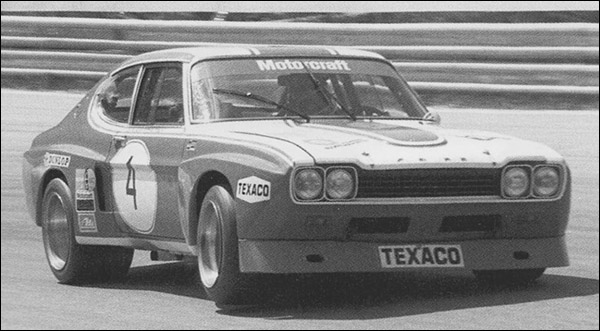
Fitz had a good offer from Ford in 1973 to drive the Cologne Capri RS2600. He won the Austrian Trophy at the Salzburgring for the second time (below), this time with Dieter Glemser, and finished second overall in the Spa 24 Hours with Jochen Mass. He competed at Le Mans for the second time with Glemser and Heyer, and they were doing nicely until their engine failed on Sunday afternoon.

However the Capri was overshadowed during the season when BMW homologated their 3.0 CSi ‘Batwing’ car and the Capris were rendered uncompetitive. Paradoxically Fitz had been offered a BMW contract by Neerpasch before the start of the season, just hours after he had signed a contract with Ford in Cologne. “It was a terrible, terrible mistake” he says ruefully.
Seasoned Porsche driver
The new Porsche Carrera RSRs fairly dominated the European GT Championship, and would do so for several years, but in 1974 competition between the Kremer brothers and Georg Loos, also based in Cologne, was intense. Fitz was back with Kremer Racing for the full season, winning three races and, for the second time winning the Porsche Cup.

By way of a diversion, he raced the Hermetite sponsored Ford Capri with Tom Walkinshaw in the Spa 24, but it didn’t reach the finish. Their hour of glory was yet to come!
Fitz completed his factory contracted saloon car career with Schnitzer in 1975, alongside a full season in the European GT Championship. He won the Salzburg race for the third time in the BMW CSL ‘wing car’, but other results were scarce.
With a heavy heart he accepted an offer from Georg Loos to compete in the European GT Championship, rivalling the Kremer team. Loos paid better, being a ‘no expense spared’ property dealer in Germany, who had his Porsches prepared in Zuffenhausen. “The cars were always great, if they needed a new engine they got it. They should have been, since they were prepared at the factory. Loos just signed the cheques. He was a difficult character, really.”
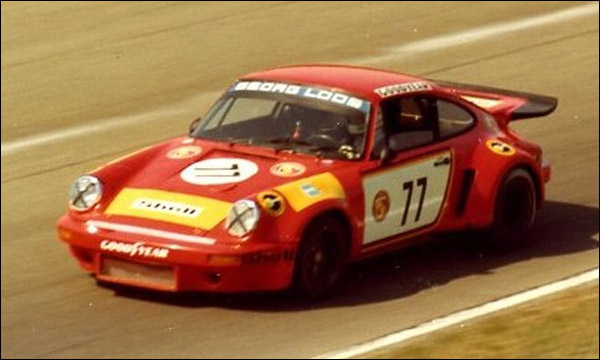
The factory even supplied the engineers and mechanics, and if anything was needed the drivers had only to ask, but competition between Fitzpatrick and his team-mates Toine Hezemans and Tim Schenken meant they shared their successes, and the title went instead to Hartwig Bertrams in the Tabernum Racing Porsche.
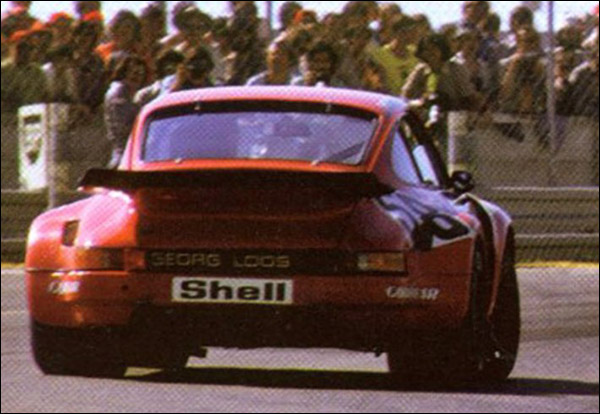
“At Le Mans Toine, Tim and I were running together in the first hour, when someone dropped oil on the section to Arnage. In a moment all three Porsches were spinning like tops without hitting each other, and we carried on, laughing!” Just as well Loos didn’t know anything about this escapade, but he had his reward when Fitz, with Gijs van Lennep and Manfred Schurti, finished fifth overall and won the GT class.
Victory at Daytona
Fitzpatrick started the 1976 season by winning the Daytona 24-Hours in a BMW 3.0 CSL entered by the North American distributor. Two such cars had been entered, one for Peter Gregg and Brian Redman, the other for Fitz and Tom Walkinshaw. “We had trouble with our car and retired quite early on, and about 10 o’clock at night Neerpasch said he wanted me to drive the other car, as Gregg wasn’t feeling very well. Typical! I drove all through the night with Brian, who I think drove 14 hours, then Gregg came back in the morning all fresh, in clean overalls, and went back in the car for the final stint.” Well, a win is a win, however achieved.

This was the first year of the new FIA endurance regulations for Group 4, production GT cars, Group 5 for modified GT cars, and Group 6 for out-and-out sports cars. Porsche prepared very thoroughly, producing the 934 in near production trim for Group 4 (it even had powered windows, since weight was geared to engine capacity), the 935 for the World Championship for Makes, and the 936 for the World Sportscar Championship.
Fitz contracted to drive the Tivvy Shenton (ex-Broadspeed) prepared, Hermetite sponsored BMW 3.0 CSL with Tom Walkinshaw in all eight rounds of the World Championship for Makes, this now blessed by BMW as the factory had prepared a fearsome, turbocharged CSL for Ronnie Petersen and Gunnar Nilsson.
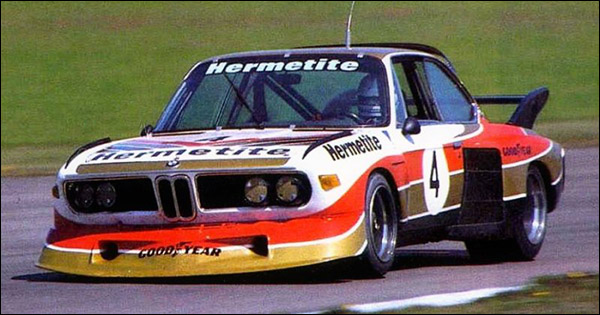
What could go wrong? Quite a lot, in fact, as Ickx burned the Martini Porsche’s clutch at the standing start at Silverstone, and soon enough the BMW Turbo was out of the race with its transmission in a molten condition.
Through this came Walkinshaw and Fitzpatrick, fending off the attention of Bob Wollek and Hans Heyer in Kremer Racing’s 935 K2, built in Cologne close to factory specification. Fitz took the flag just 20 meters ahead of Wollek, a finish that thrilled the spectators. This was their first World Championship victory, and the pairing got close finishing second in the 6-hour race at the Osterreichring, fourth in the earlier round at Vallelunga. Le Mans, though, produced a disappointing retirement after four hours.
Fitz travelled to the other end of the world, the Hardie-Ferodo 1,000 at Bathurst for his next outing, and it was hugely successful. He helped Bob Morris to win the event in a Holden Torana, though this was not without a scare as the car trailed smoke in the closing laps. An oil seal had failed and was leaking into the clutch, slowing the car on the uphill section and produced a nail-biting finish.
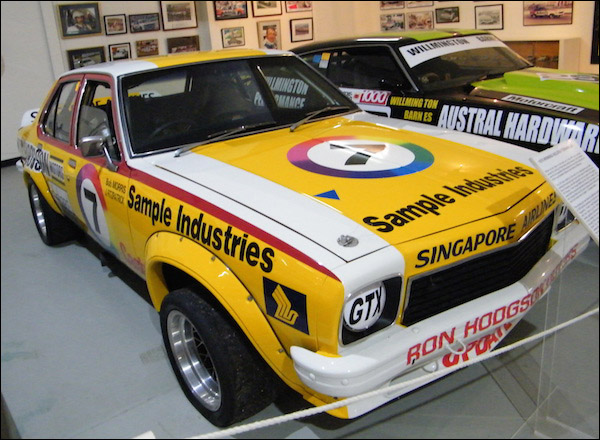
He became a regular competitor at Bathurst with Morris, Fred Gibson and Allan Moffatt, and he and Morris drove their Ford Falcon to second place in 1981. The following year Fitz had a big accident during practice, when a wheel broke on the Falcon and put him into the wall at Forrest Elbow, and they had to withdraw the entry.
Fitz signed to a big programme in 1977, back to Kremer Racing for five World Championship for Makes events in their 935, plus the DRM, and with Broadspeed to drive the Jaguar XJ12C in eight rounds of the European Touring Car Championship. Driving with Wollek in the World Championship, Fitz shared an outright victory at Hockenheim, a six-hour race, and there were two more podium finishes, second at Silverstone and second again at the Nürburgring.
With Jaguar, briefly
Jaguar, though, was another matter. Fitz was on the point of signing a fresh contract with Hermetite to sponsor a Kremer Porsche 935 when Jaguar came along with an offer to drive the Broadspeed prepared Jaguar XJ12C. Fitz asked that Tim Schenken should drive with him, and Andy Rouse was paired with Derek Bell. On paper it was a formidable team. “The Jaguars were massively fast, but we were developing them at the races, and when they started to come good Jaguar cancelled the programme.”
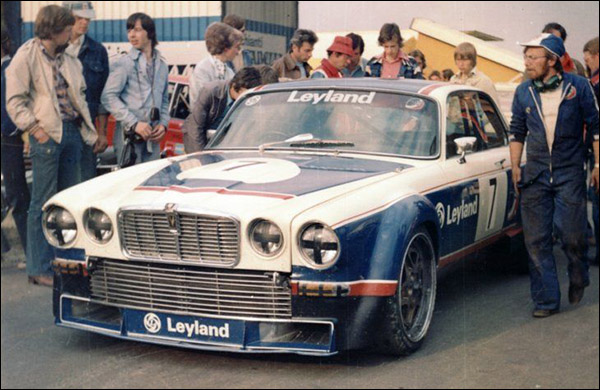
Fuel consumption was always cited as a reason why the V12 Jaguars struggled against the six-cylinder BMWs, but Fitz disagrees. “Fuel consumption wasn’t really a problem because there was no limit on fuel, or the number of times they stopped. It didn’t matter because the cars were massively quick! At the Nürburgring I was on pole position, ahead of the works BMWs, and at the end of the first lap [of the Nordschleife] I was 20 seconds ahead. You wouldn’t expect that at the Nürburgring, where you expect good handling to be the key, but the car was just so quick!”
But unreliable, he might have added. He and Schenken finished only once in eight races, at Brno where they were classified 16th after a tyre blowout. At that, Jaguar lost heart and cancelled the programme, in fact after the team had practised at Mugello, “we were told on Saturday night ‘it’s all off, we’re going home’. We went to the airport on Sunday morning, and when the plane arrived it had a load of journalists on board, invited out by Jaguar to watch the race. They went to the track while we boarded the plane and flew home. Embarrassing!”
Fitz then went back to Georg Loos’ Porsche 935 team in 1978, contesting the World Championship for Makes and the German DRM series He won the Mugello 6-Hour World Championship race with Hezemans and Heyer, and a few weeks later he was again a winner at Mugello, with Umberto Grano, this time in a Team Luigi BMW Italia CSL, one of several ETC races he contested.
The Loos Porsche team travelled to Watkins Glen for a successful sortie, Peter Gregg joining Fitzpatrick and Hezemans for the traditional 6-Hour race (though as the John Bohner pic below shows there was rather more ventilation than planned for a time). This was an important event on the calendar, and Fitzpatrick was thoroughly enjoying his trips to the States. Returning to Europe, Loos entered two cars for the Vallelunga 6-Hours and Fitz drove both of them, finishing in second and third positions overall. He was on the podium seven times in the German DRM championship.

His appearances in the European Touring Car Championship at an end, Fitz now concentrated on the World Championship for Makes with Loos’ Gelo Racing Porsche 935 in 1979. Partnering Bob Wollek and Manfred Schurti, Fitzpatrick was able to win the Mugello 6-Hours for the second year running, and they followed up by winning the Rivet Supply Silverstone 6-Hours by seven laps, another big success on home territory. He and Schurti then won the ADAC 1,000 Kms at the Nürburgring, which was a happy hunting ground for the Englishman.
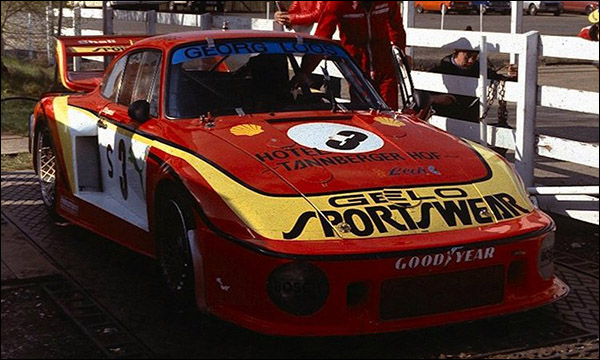
So much so that Fitz raced at the Nürburgring 41 times, making him a real meister of the Nordschliefe. Records show that he competed 20 times at Spa, 17 times at Monza, 16 times Silverstone, 14 times at Daytona and the Norisring, 11 times at Le Mans and Hockenheim, eight at the Salzburgring and Zandvoort, and seven at Brands Hatch.
Part 2 tomorrow