With the start of the 2025 edition of the Spa 24 Hours approaching, it’s a good chance to take a breath and look back into the history books.
DSC’s resident historian, David Greenhalgh, has dug up some truly fascinating nuggets from the history of this great race:
Fortunes of war
Many European wars over the centuries have resulted in international borders being redrawn.
In that respect, the Spa 24 Hours as we know it was an unwitting beneficiary of World War I. Before that conflict, the roads which later formed the original 14km track lay partly in Belgium and partly in Germany.
If that had remained the case, the 24 Hours could not have been created – at least not on the roads which went on to become a legendary part of motor racing history.
Lambo on the list
In 2024, Lamborghini became the 17th marque in the history of the race to have claimed pole position. The 16th name on the list had been Mercedes-Benz in 2019 – but the Stuttgart marque made up for its late start by then wining four pole positions in a row.
Pacy Perera
Franck Perera’s 2024 pole time of 2:13.718 equated to an average speed of 188.56 km/h. This was a record pole speed for any of the versions of the 7km track which have been used for the 24 Hours since 1979, and indeed is faster than four of the pole speeds on the daunting old 14km road circuit.
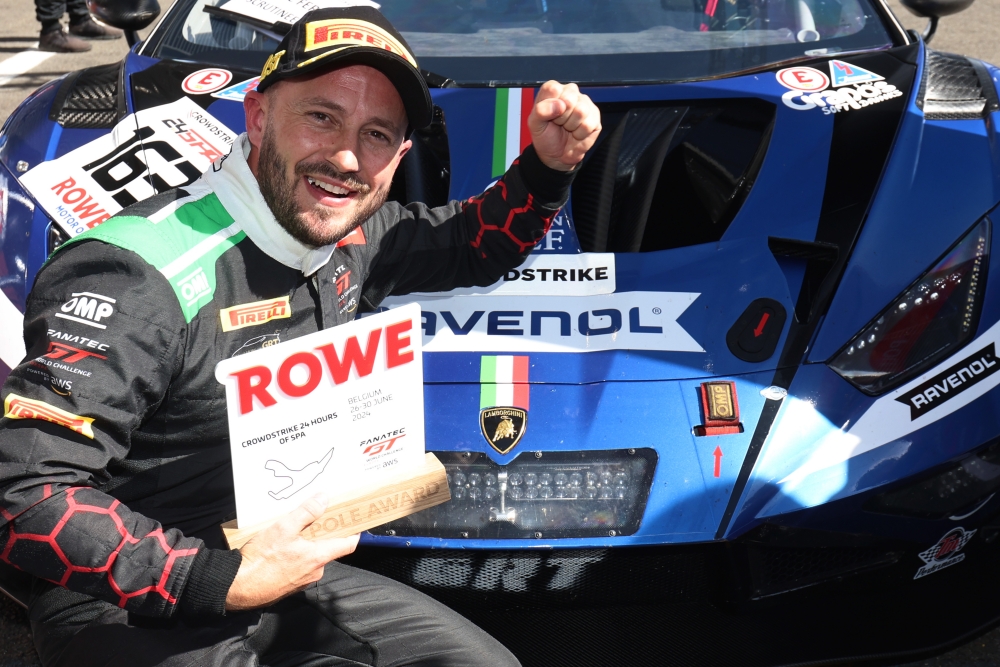
However, the fastest lap in the 2024 race fell just short of breaking the lap record for any of the 7km circuits. Marco Mapelli’s 2:16.105 was good for 185.26km/h, but Oliver Gavin (Corvette C6.R, 186.19km/h in 2009) still holds the lap with the highest average speed in any of the 46 editions of the 24 Hours from 1979 to date.
Close at the front
Perera claimed the 2024 pole by just 0.036s, which is the third closest pole margin in the history of the race.
Remarkably, there is a tie, to the thousandth of a second, for the closest margin: Frank Stippler edged out Kevin Estre by 0.017s in 2015, then Maro Engel shaded Laurens Vanthoor by the very same fraction in 2019.
Don’t blink
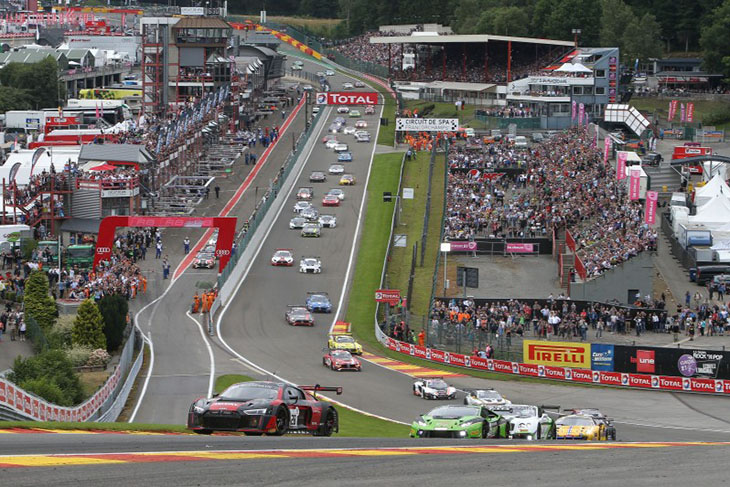
The GT3 category has now been the headline act in the last 14 editions of the 24 Hours. Such is the impressive depth and intensity of the contest that the average margin by which pole position was claimed in those 14 years has been just 0.124s.
The three closest margins were mentioned above, while at the more comfortable end of the scale, Raffaele Marciello had a leisurely 0.303s in hand over Mirko Bortolotti in 2021.
Aston’s long drought
It was noted in these items last year that Bentley had to wait 73 years (1930 to 2003) for another victory at Le Mans, as did Peugeot at Spa (1926 to 1999).
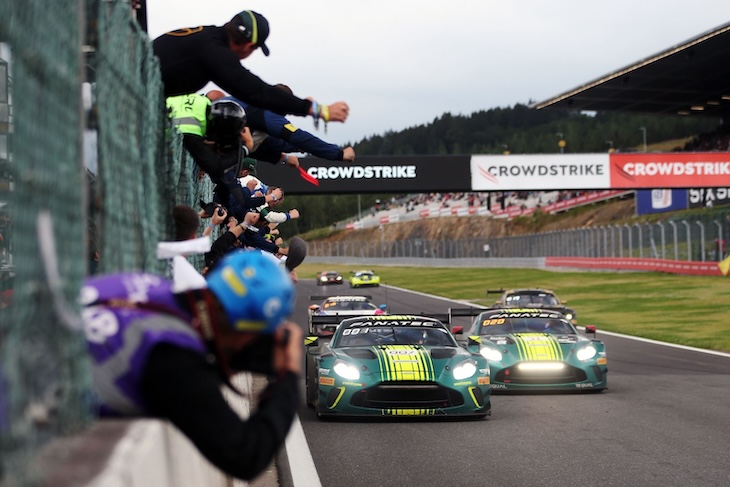
Aston Martin has now trumped those records, as its 2024 win at Spa came no less than 76 years after its previous success in the race, with St John Horsfall/Leslie Johnson’s DB1 in 1948.
Persistence required
Aston Martin’s 76-year drought at Spa is a record which is likely to stand for a very long time in any major race.
We can safely discount the prospect of Mercedes-Benz, Peugeot or Maserati adding to their Indianapolis 500 tallies any time soon. The only manufacturers with even a vague chance of beating Aston Martin’s record in the foreseeable future are therefore Alfa Romeo (which last won Le Mans in 1934 and Spa in 1938) and Bugatti, which last won Le Mans in 1939.
While that may not seem very likely at the moment, who would have expected to see cars branded as Alfa Romeos running in F1 in recent years?
It’s the race that counts
Partly due to the race’s long history with touring cars, BMW easily leads the marque honour rolls for both pole positions and race wins. However, the two figures are very different: the Bavarians have taken just 13 pole positions compared to 25 victories.
A stark example of this discrepancy occurred in the 11-year period from 1981 to 1991, when BMW failed to claim even one pole position in the face of very fast campaigns from Chevrolet, Jaguar, Rover, Ford and Nissan – but still won seven of those races.
Similarly, in the GT3 era of the race from 2011, BMW has claimed two pole positions, but four race wins.
In classic endurance racing style, reliable speed over the 24 hours has often served BMW much better than blistering outright pace.
128 marques
The 76 editions of the 24 Hours have been contested by no less than 128 marques. The size of this figure is helped by the fact that the race has had both touring car and sports car eras, with each category tending to attract different manufacturers. Eighteen marques have won the race outright; another 15 have claimed a second or third place outright; and another 37 have claimed a top 10 outright finish.
There are some weird and wonderful names on the list of marques which have taken part in the race: it’s not every day that you see a D’Yrsan, Hanomag, Locomobile or Zastava trundling along a road or racetrack near you.
Wouldn’t happen now
The 1924-78 era of the race, on the notorious 14km road circuit, had an eerie feel to it. The very high speeds and casual safety measures contributed to numerous serious accidents, some of which were unfortunately fatal. It created a sense of the race lurking out there beyond the pale; it was similar in that respect to the continuing aura of the Isle of Man motorbike TT.
Fortunately, not all the strange and violent incidents on the old track had serious consequences. For instance, during the night in the 1974 race, Johann Abt (Audi 80) was running out of fuel at Stavelot. His slowing car was struck a mighty blow from behind with such force that the Audi was launched right over the armco fence – but the enterprising Abt persuaded the marshals to unscrew the fence to allow him back onto the track, and limp the battered Audi back to the pits!
Quality and quantity
Andrea Bertolini recently announced his retirement from professional driving. He won Spa twice for Maserati, in 2006 and 2008, and also claimed class victories in 2012, 2014 and 2022.

In 2024, when he finished second in Bronze, he became the seventh driver to have reached the twin milestones of having won the race, and made 20 starts.
Six at the top
Andrea Bertolini also stands proudly at the top of the list of drivers who have won their class in the 24 Hours.
Researching class winners in the history of the race is a very difficult and time-consuming exercise: there are numerous occasions when the available sources simply can’t be reconciled, so all that can be done is to make an informed estimate of which one of the possible options is most likely to be correct.
With that caveat, the 76 races to date seem to have produced just six drivers who have won their class five times: Arthur Duray, Peter Seikel, Jean-Michel Martin, Thierry Tassin, Eric van de Poele and Andrea Bertolini.
Enjoy it while you can
History shows that any driver achieving a class victory in the 24 Hours should enjoy the moment, because the chances are it won’t happen again.

With the qualifications set out above, I believe that 707 drivers have won a class victory in the race. A massive 535 of them only ever claimed the one win, while 122 drivers won twice, and 36 drivers won three times.
Eight drivers (Jean-Claude Andruet, Lothar Schörg, Pierre Fermine, Roberto Ravaglia, Dieter Quester, Emanuel Collard (above), Jean-Francois Hemroulle and Kurt Mollekens) won four times, and just the six drivers mentioned in the previous item have claimed five class victories. It is an unusually widespread distribution of success.
The forgotten man
One of those 36 drivers who has won three class victories is Claude Ballot-Lena, for whom one of his three class wins was also an outright victory (1969, in a Porsche 911). He had an even better record at Le Mans, winning his class seven times, making him the only driver to have ever won 10 class victories in these two classic European 24-hour races.
Over the Atlantic, he won the 1983 Daytona 24 Hours in a Porsche 935, and was second in 1976.
Ballot-Lena therefore constructed a very impressive endurance record, for which he deserves more credit than he has received.
Many marques
The number of manufacturers (63) which have won their class is also spread fairly thin, partly because the first race occurred 101 years ago, so some manufacturers are no longer extant, and also because the event has veered back and forth between sports cars and touring cars.
As could be expected, BMW heads the list with 51 class wins, followed by Porsche with 40. Due to very strong performances in the 1930s, 1960s and 1970s, Alfa Romeo has 28 class victories, but will soon be eclipsed by its compatriot Ferrari, which currently has 25 wins. Ford is in fifth place, with 17. The top ten is completed by Toyota (14), Mercedes-Benz (13), Audi (12), Opel (11) and Honda (10).
Three for three-pointed star
Mercedes-Benz won three of the 2024 classes: Gold, Silver and Pro-Am. It was the eighth time that a marque has won three of the classes in a single edition of the 24 Hours.

However, the record still stands with BMW, which won four of the classes in the 1997 race.
Win or bust
Tom Walkinshaw had a very unusual history in the race. In 11 starts, he only ever achieved two outcomes: he either won it (1981 and 1984), or else he DNF. Very few drivers who have made a substantial number of starts in a major race have a solely hero or zero record over their entire history of competing in that race.
European playground
While Le Mans has produced a very cosmopolitan list of winning drivers, the outright victories at Spa have been completely dominated by Europeans.
Just seven of the 154 drivers who have won the race have hailed from outside Europe, and each of those seven drivers has only won the race once. There has been one winner from each of Asia, Russia, America (Luigi Chinetti was Italian for his win in 1933, but is generally thought to have become American by the time of his 1949 victory), Venezuela, Australia, Japan, Brazil and New Zealand.
Remarkably, the 1991 race remains the sole occasion when two drivers from outside Europe, David Brabham and Naoki Hattori, were in the winning crew.
Tsar’s man wins Spa
It is difficult to attribute a nationality – or even a home continent – to 1928 winner Boris Ivanowski. Like 1931 victor Dimitri Jordjadze (who is the Asian Russian mentioned in the previous item), Ivanowski was born in the Asian part of Russia.
However, having been part of the Imperial Guard, Ivanowski fled Russia after the 1917 revolution and settled in Paris. It is not known if he was still a Russian national, or had become French, at the time of his Spa victory. Either way, it seems likely that Ivanowski should be regarded as being European rather than Asian, so I have not included him in the above list of non-European winners of the race.
In keeping with his rather colourful and mysterious past, there is even some doubt about how Ivanowski died: it could have been a road crash, perhaps in Venezuela, possibly in 1967. It would hardly be surprising if one or more of those three circumstances was not in fact the truth.
Hometown heroes
There is a close contest between those European nations which have provided all but seven of the drivers who have won the race.
Appropriately, Belgium leads the way with 31 winning drivers, closely followed by Germany (including West Germany) with 30, and France with 28. Italy (16) and Great Britain (10) are well behind in fourth and fifth places.
There is some doubt about whether Stéphane Ortelli should be regarded as being French or Monégasque when he won the 2003 race: some sources say he was still French at that stage, although the flag of Monaco was displayed next to his name above the door of the winning car. He has not been included in the above total of French winners.
Privateer paradise
The 1976 race was won by a crew comprising an iron works manager, an insurance agent, and a garage owner; now that’s privateer racing!
Jean-Marie Detrin/Nico Demuth/ “Chavan” (Charles van Stalle) had a faultless run in their BMW 3.5 CSL, and were the only one of the seven big BMWs to reach the flag.
The 1976 race is also notable for being one of the very few major races around the world which were won by a driver (Demuth) from Luxembourg.
40 year drought
For many years, the 24 Hours attracted leading Grand Prix drivers, but it is now 40 years since the race was won by a driver who either had already won, or would go on to win, a major Grand Prix. When he won Spa for Schnitzer in 1985, Gerhard Berger was already a full-time F1 driver, and would go on to win 10 World Championship GPs.

Apart from Berger, the drivers who have won the 24 Hours and a significant GP are Robert Benoist, Louis Chiron, Giuseppe Farina, Mike Hawthorn, Jacky Ickx (above), Jochen Mass, Raymond Sommer and Goffredo Zehender. (Spa winners Dieter Quester, David Brabham, Jörg Müller and Daniel Juncadella have each won the Macau GP, and Earl Bamber has won the New Zealand GP, but it is WDC GPs, or their equivalent in the pre-1950 era, which are being considered here.)
Relay – really?
The 2007 and 2008 races featured one of the most bizarre experiments in the history of endurance racing.
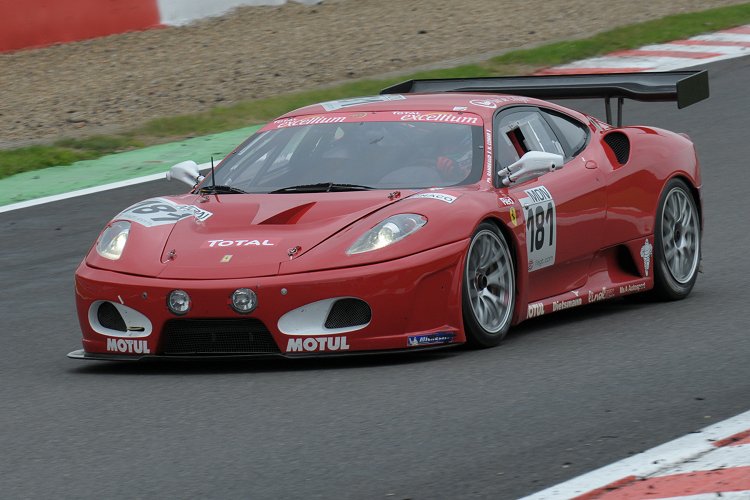
In 2007, there were two entrants, but six cars, competing in the Coupe de Roi: each car in a three-car team would run for two hours, then pull off in favour of its team-mate, like a relay runner in athletics handing the baton to the next runner.
If a car failed, the team had to wait 30 minutes before sending out its next runner. This extraordinary concept was won by JMB’s squad of Ferrari F430s.
In 2008, the JMB trio were the only entrants. Thankfully, the ludicrous idea was then shelved.
High achiever
Various racing categories quite rightly make a point of celebrating drivers who have succeeded in cars carrying their own name: think of Jack Brabham in F1 and Jean Rondeau at Le Mans.
The nature of the cars raced at Spa makes this feat more difficult to achieve, but Robert Sénéchal gave it a determined go in 1925. He finished 12th outright and 3rd in class, having driven his Sénéchal the whole way single-handed. Two years later, he approached the task in more orthodox fashion: this time, he shared an Excelsior with Nicolas Caerels – and won the race outright.
Before becoming a racing driver, Sénéchal had won the Croix de Guerre flying for France in the Great War. Not only did he survive these two very hazardous occupations, but he lived to be 93, the longest-lived of all the Spa winners.
Robert Sénéchal had indeed lived a remarkable life.