


Here it is, the complete five-part A-Z of Hypercar and GTP from Dailysportscar.com, all in one place!
ACO
The ACO (Automobile Club de l’Ouest) is the organising body for the now more than a century-old Le Mans 24 Hours and was the founding partner of LMEM (Le Mans Endurance Management), which operates and promotes the FIA World Endurance Championship, as well as the European and Asian Le Mans Series.
Based in Le Mans and under the current Presidency of Pierre Fillon, the ACO was a key partner (together with IMSA and the FIA) in the decision to converge its original Hypercar regulations with IMSA’s LMDh ruleset.
ACO work together with the FIA on establishing and evolving the technical and sporting regulations. ACO also produces annual Supplementary Regulations that are specific to the 24 Hours of Le Mans
Action Express
See Cadillac.
Acura
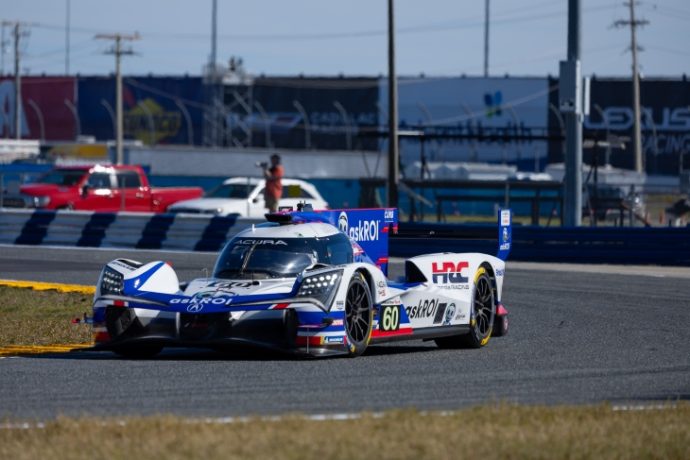
Started in IMSA GTP with two Oreca-chassis LMDh-rules cars in 2023 – one apiece from continuing supported Acura teams Wayne Taylor Racing and Meyer Shank Racing.
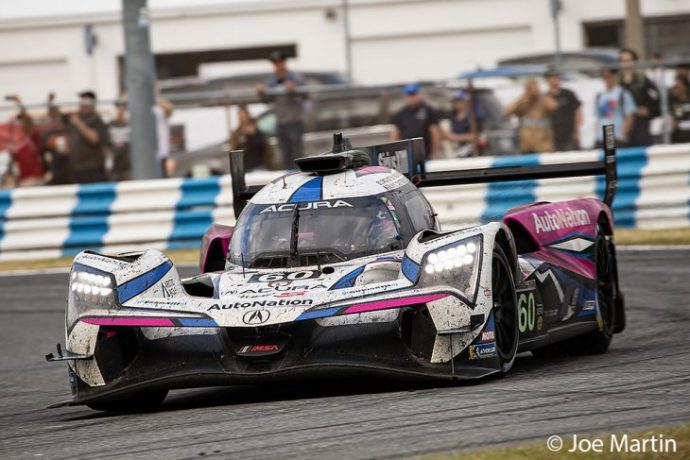
Wayne Taylor Racing also partnered with Andretti Autosports before the start of the 2023 season, but that aspect of the team’s makeup has since been set aside.
For 2024 in IMSA the effort switched entirely to Wayne Taylor Racing with a pair of cars, before the wholesale switcheroo of service providers for 2025 saw WTR return to Cadillac and the Acura effort entrusted to the returning Meyer Shank Racing team with one car handled entirely by MSR and the other engineered ‘in-house’ by the newly established HRC USA.
Acura is understood to have had informal (and unsuccessful) discussions with the ACO about allowing an Acura to take up a Le Mans invitation. However, it is and instead is now evaluating a near-future full-season FIA WEC effort under the Honda brand (see Honda).
Any WEC programme would have to be signed off under the Japanese end of the Honda brand. It is understood that there have been some talks, but at present there is no imminent programme in sight.
The ARX-06 also made history as the car that scored the first GTP win at the 2023 Rolex 24 at Daytona, albeit in controversial circumstances.
AF Corse
See Ferrari.
Alfa Romeo
Alfa Romeo CEO Jean-Philippe Imparato made public statements that the historic Italian brand, now part of the Stellantis group, was considering a return to sportscar racing alongside an evaluation of how the brand might manage to continue in F1 after its partnership with Sauber concluded at the end of 2023.
The plans for Glickenhaus to initially utilise a modified turbo V6 from Alfa Romeo deserve consideration here, too. That plan had to be revised when the regulations were amended to accommodate the cancelled (but later rejuvenated) Aston Martin Valkyrie.
The 2023 evaluation came to nothing. But the matter arose again much more recently, with a Hypercar programme for Alfa Romeo in place of Peugeot eventually falling victim to the brand’s currently weak market position. Stellantis opted instead to a soon-to-be-confirmed re-commitment for Peugeot with a still-to-be-announced successor to the 9X8, to give the French brand another shot at cracking the Hypercar code. (See Peugeot)
Alpine
Renault’s sporting brand was the first manufacturer to field two entirely different cars in Hypercar, both with the assistance of Philippe Sinault’s Signatech operation, after its two-season stopgap ex-LMP1 Rebellion, ‘grandfathered’ down in performance and re-badged as an Alpine A480.
The A480 scored a pair of overall wins in Hypercar in 2022 and took the championship chase down to the wire at the final round.

2024 saw the FIA WEC debut of its Oreca-based LMDh machine, the Mecachrome turbo V- engined A424, with a pair of cars for World Championship competition.
The car scored its first podium finish at Fuji in 2024 and followed that up, after Alpine used one of its allowed ‘Joker’ upgrades to address some engine concerns, with a second third place at Imola in 2025.

Alpine has had aspirations to market customer cars. An early-programme apparent opportunity in IMSA, though, disappeared with the Andretti organisation’s alliance with Wayne Taylor Racing and uncertainty surrounding the introduction of Alpine to the North American market.
Alpine has taken its engine build and development in-house from Mecachrome, with a gradual transition taking place since the 2025 24 Hours of Le Mans. This was made possible, according to Signatech, because of the brand’s decision to switch to Mercedes power in F1 from 2026.
Andretti Autosports
See Alpine and Acura.
Asian Le Mans Series
Outline plans were announced by the ACO and LMEM at the 2025 Le Mans 24 Hours to introduce Hypercars to the Asian Le Mans Series from 2026/ 2027.
The plan is based around purely privateer efforts with Pro-Am crews, the latter a first for the class (with the exception of a one-off appearance by Ben Keating at the 2024 Rolex 24 Hours in a JDC Miller Motorsports GTP class Porsche).
Aston Martin
The VERY early adopter of the original Hypercar regulations (an initial announcement came at Le Mans in 2019), with the Valkyrie, then pulled out less than a year later, having forced the rules in a direction which supported its ‘road car’-based platform and left something of a mess for both Toyota and Glickenhaus.
The GR010 platform was modified as a result of the revisions necessary to accommodate the Valkyrie, and the 007 needed a replacement engine from its originally planned Alfa Romeo unit.

Aston Martin later revealed at least some elements of the original Valkyrie LMH within its track-only AMR Pro car. This was based around a new and longer chassis with performance parameters that significantly exceeded those planned for Hypercar.
Scroll forwards to June 2023, and DSC ran the first story suggesting that the Valkyrie Hypercar programme was likely to re-emerge, as the extraordinary cavalcade of emerging factory interest in Hypercar and GTP gathered momentum.
Just a few months later, that story was confirmed when The Heart of Racing owner Gabe Newell and his team collaborated with Aston Martin on a joint WEC and IMSA programme for 2025.
The Cosworth V12, non-hybrid LMH cars debuted in the WEC at Qatar and in IMSA (with a single car) at Sebring, the cars immediately became fan favourites with their screaming soundtrack and fabulous looks.
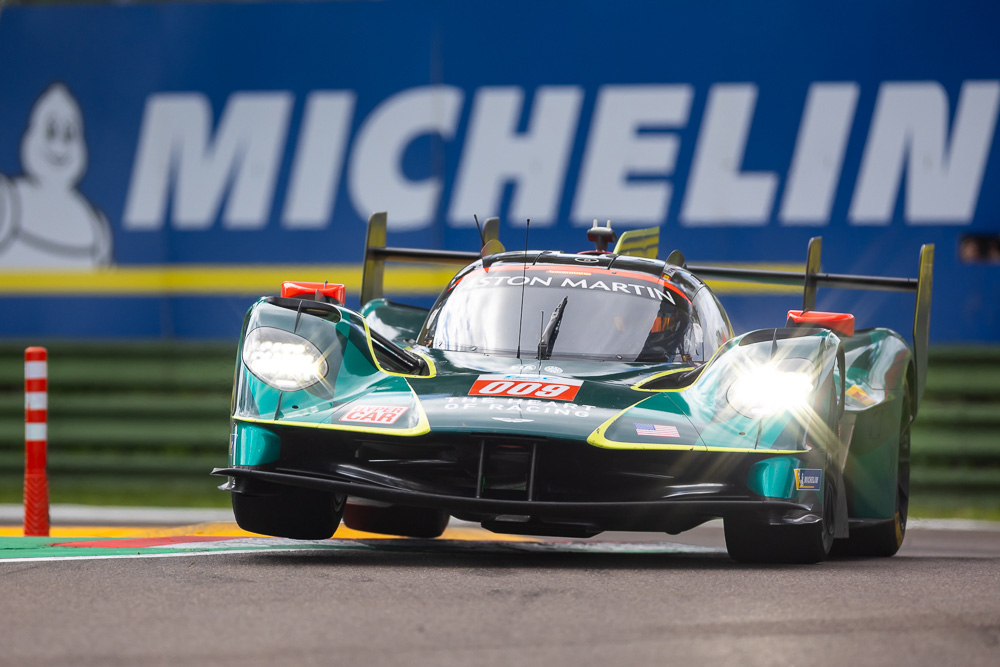
The car’s debut at Le Mans in 2025 saw the #009 make Hyperpole, and both cars ran reliably, albeit somewhat off the ultimate pace, en route to a highly creditable double finish.
Programme insiders predict significant strides will be made during the flyaway rounds before the end of the current season, but podiums on pace are some way away as yet.
As for the future, ultimately the car’s race performances will play a major part on that front, with any discussion around potential customer cars some way away. A touch ironic, as the initial 2019 plan had foreseen cars fielded by a factory team, with a then-likely privateer car to be fielded by the now-stalled R Motorsport outfit from Switzerland.
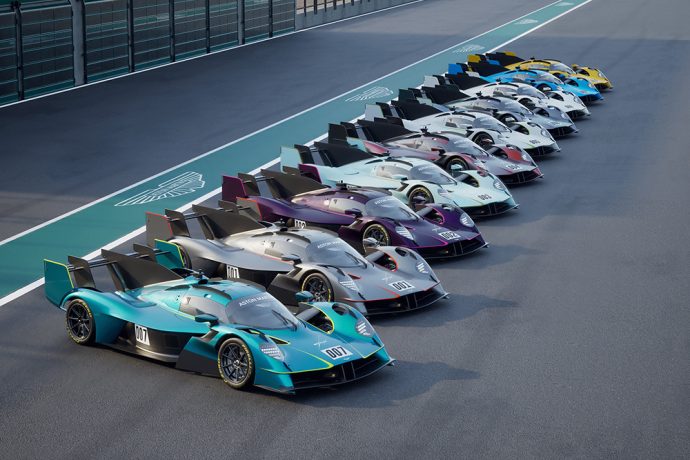
At Le Mans, Aston Martin announced a run of 10 track-only Valkyrie LMH cars for customers, not homologated for racing.
Audi
Early adopters of the LMDh regulations with an Audi rework of the Multimatic-Porsche that became the 963.

The programme progressed sufficiently to have a chassis delivered (above), and Nico Müller and René Rast were announced as drivers, with WRT all but confirmed as the factory WEC team.
The initial plan was for parallel WEC and IMSA programmes, before the IMSA aspect was later reeled back when the brand’s new management determined that they would prefer to progress an engine programme for Formula One. The WEC effort was first postponed, and later cancelled.
As an aside, Audi later came close to joining the WEC’s LMGT3 category, partnering with Sainteloc to develop a version of the R8 for the new 2024 ruleset. However, the brand didn’t make the cut when the entry list was finalised.
Autotecnica Motori (ATM)
An Italian-based engine and powertrain expert was named as the engine builder for the turbo V6 motor for the 2027 McLaren Hypercar.
See McLaren for more.
Balance of Performance
A key principle in making the ‘convergence’ between LMH and LMDh rulesets possible.
The principle of balance of performance was established in the mid-noughties to allow existing GT1 machinery to compete with the incoming Maserati MC12 and utilised a range of measures to manage the potential peak performance of all cars contesting a given class.
The BoP framework was then applied to the new GT3 class (and later to GT4 as well) to allow an unprecedented variety of machinery to compete head-to-head in the same class and the same races.
Carried over to the Hypercar and GTP classes, the basic principle is intended to cap peak performance at any given circuit.
In doing so, values for the car’s mass, power, power over a pre-defined speed, power-to-weight ratio and energy usage over a stint can be managed.
For all 2025 WEC races other than Le Mans, the calculations take into account the best-performing car of each brand in two of the past three races. Adjustments are also made to ensure that each car completes the same number of laps per energy stint.
The effective challenge is for any competing car to reach as close to the defined maximum performance values as possible and to stay as close to them for as long as possible, despite managing energy and degrading tyres.
At Le Mans, the regular system is ‘parked’, replaced by a simpler system based around each car’s homologated values for weight, power and aero performance, with a specific adjustment made to attempt to equalise top speed.

The performance of all cars is monitored in real-time via torque sensors applied to all driven axles, ensuring that rulemakers can detect if defined maximums are exceeded.
The system for 2025 has received its fair share of criticism from fans, the media and (albeit off the record by regulation) competitors since the opening round at Qatar.
It remains to be seen if further significant changes are in the pipeline for the WEC’s premier division, in light of IMSA’s recent decision to allow manual adjustments to be made alongside its five-race rolling average system to close the gaps between the GTP Manufacturers.
Bentley
DSC is aware of at least three attempts to bring the British luxury brand into the hypercar market, all based around the LMDh ruleset and with at least one (and most likely two) of the projects focusing on a car based around Multimatic’s spine.
The first, entirely private, project fell foul of timing and supply chain woes. Two further pushes, more directly, included the factory, though neither progressed beyond the evaluation stages.
Beyond that, there are rumours of another future potential plan, but these are denied by well-placed insiders!
BMW
BMW’s M Hybrid V8 LMDh car with a Dallara-supplied ‘spine debuted in IMSA in 2023 with a pair of cars contesting the full IMSA WeatherTech SportsCar Championship fielded by BMW Team RLL.
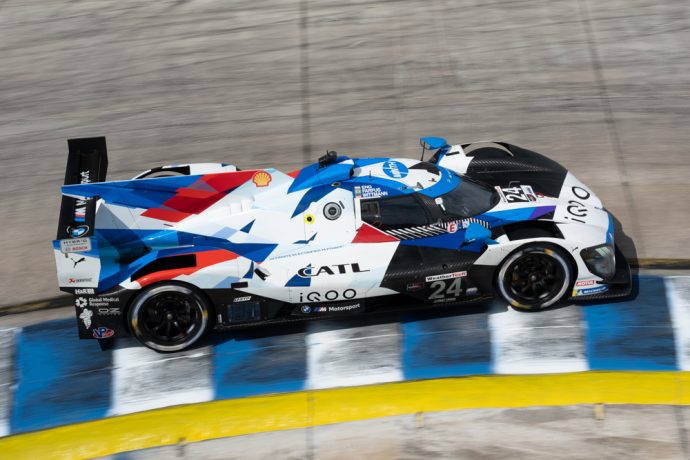
The Turbo V8-powered cars struggled at Daytona on their debut but were much closer to the pace at Sebring, where the late-race carnage gave the team a second-place finish. That was the first of five podium finishes, including a win at Watkins Glen, for the car’s first season, all scored by the #25 car, which finished sixth in the overall standings.
BMW added a full-season WEC programme for 2024 with Team WRT engaged as the factory service provider. Progress was initially slow, but the team were finding pace by the end of the season, with a first (and only) podium finish coming at Fuji for the #15 car.

The #20 car, meanwhile, carried the 20th official BMW ‘Art car’ livery at Le Mans with a scheme from Julie Mehretu.
2024 saw limited success too for the IMSA effort with a one-two finish at Indianapolis pretty much the only standout result of the season for RLL.

The current season has seen the WEC effort take significant strides in terms of sustained pace, and whilst there has been just one podium finish (at Imola), the BMW is seen as a realistic contender for more consistent results. 2025 also saw the car emerge after the first technical ‘Joker’ was taken, for an update involving the braking system.
The current IMSA season has seen the cars on the pace, but strategic blunders have cost the marque the potential for better results. That’s believed to be a key reason why BMW has opted to part ways with RLL at the end of the 2025 season.
A decision on the new service provider for North America was initially planned for May but was delayed, in part due to uncertainty surrounding global trade. Whilst Pratt Miller initially seemed to be in a strong position to take over, interest from WRT in taking on the IMSA programme currently seems to have won the day. We also await a final decision on the scope and scale of the GTP programme for next season.
Meanwhile, the plan for a potential third, privately entered BMW from Team WRT for the 2024 FIA WEC was quietly shelved, along with plans for a third car at Le Mans in 2025. But there are signs that BMW is interested in supplying a customer car in the relatively near future.
Bosch
Bosch supplies the Motor Generator Unit (MGU) for the single-source hybrid drive for LMDh cars and is a key supplier of electronic systems across the Hypercar and GTP classes.
Bugatti
There were vague rumours that Bugatti’s track-only Bolide might morph into an LMH Hypercar, but absolutely nothing of real substance emerged from those reports.

ByKolles
See Vanwall.
Cadillac
Cadillac’s Dallara-based, V8-powered V-Series LMDh was redubbed the V-Series R after its Daytona 2023 debut. IMSA is keen to have its cars described as GTPs, and the WEC is equally keen to maintain the Hypercar moniker.

Three cars were fielded for the opening season – two full-season cars in IMSA, and a single car in WEC. In the USA, there was one car apiece for Cadillac Racing (Ganassi Racing) and Action Express. In the WEC, there is a second Ganassi-run car running under the factory banner in the World Championship.

2023 saw Action Express take the Teams’ and Drivers’ Championship and the Michelin Endurance Cup despite scoring only one race win, at Sebring. Consistent strong points finishes proved to be the key in a super-tight season.
The Ganassi #01, meanwhile, won at Laguna Seca, helping Cadillac to the Manufacturers’ title too.

In the WEC, progress was less visible with just a single podium finish, albeit at Le Mans. A car-destroying accident at Spa for the US-based car disrupted preparation for Le Mans, where the Action Express car had an early accident that left it laps down that could not be recovered. All three cars, though, finished, with the two Ganassi cars finishing third and fourth overall.
2024 saw further challenges in the WEC with big accidents at Spa and Fuji (where the car had been put on pole by Alex Lynn), resulting in a podium-free season.

In IMSA, there were two wins for the solo Ganassi-run car, at Long Beach and Petit Le Mans (the latter with the car in pink livery), the latter result salvaging third in the standings. But it was too late to see Ganassi return at the helm. The Action Express car, meanwhile, had a win-free year and finished fourth in the points.
The big news, though, was the massive switcheroo in service providers: Ganassi were out and in the WEC, JOTA were in for an expanded two-car effort in 2025 on a multi-year deal. It would be a two-car effort too for the new team taking the reins in IMSA, Wayne Taylor Racing, back to the marque with which it had huge success in the DPi era. Action Express would continue with its single car, too.

The early-season results in IMSA in 2025, though, were pretty much a disaster; a fifth place for the #10 car at Daytona was the best result of the first four races for WTR, while AXR missed out on a trip to the podium too. It wasn’t until the round at Detroit that things began to turn a corner.

In WEC, remarkably, fifth place was the best result, too, ahead of Le Mans, this for the #12 car at Spa. It could, though, have been so much better, the two Cadillacs had looked super strong at the Qatar season opener before colliding with each other under the Safety Car whilst sitting one-two!
For Le Mans in 2025, a total of four Cadillacs were fielded, a record for the marque since 2000, with both WEC Jota cars, the Action Express car and a debut at the race for Wayne Taylor Racing.
Alex Lynn would score pole for the #12 Cadillac Hertz Team Jota car and would help teammates Norman Nato and Will Stevens to an eventual fourth-place finish in a race that would see both US-based cars DNF.
The first big result then came earlier this month, when JOTA captured a 1-2 finish at São Paulo with a dominant run, delivering the V-Series.R’s first win on the global stage.
Convergence
The process, announced in early 2020, involved modifying the pre-existing ACO/FIA LMH regulations and IMSA LMDh regulations to allow cars that comply with both sets of technical regulations to compete as a single class.
Cosworth
The legendary British company builds the V12 engines for the Aston Martin Valkyrie in road, track-only AMR Pro, and LMH forms, and is a key supplier of electronics for a number of cars.
Dallara
The Italian motorsport engineering giant supplies the chassis ‘spines’ for the LMDh cars for both BMW and Cadillac, and also built the chassis for the Ferrari 499P. It is also set to become the chassis supplier for the McLaren LMDh programme from 2027.

De Tomaso
Sources close to the revived De Tomaso marque suggested a couple of years ago that a racing hypercar derivative of its forthcoming P72 road car (being built by HWA) might be under consideration.

Interestingly, whilst other sources within the organisation denied the project was under consideration, focusing instead on an extreme track-only car, the positive response the stories received has, at the very least, persuaded the outfit to take a look at the scale of the project that would be required to go racing.
The V12-powered car, though, is still listed here as ‘unlikely’.
Dodge
Another Stellantis brand and another to have been linked to a potential campaign with a car based on the platform of the Peugeot 9X8 for an IMSA programme.
That said, the early noises that suggested this as a real possibility have gone very quiet in recent months, with absolutely no confirmation whatsoever of any sort of live programme. The Dodge brand’s future in motorsport appears to be centred on stock car racing, with the spin-off RAM brand set to return to the Truck Series in 2026.
Driver Ranking
An FIA-operated process whereby drivers, on request to the FIA, are assessed and allocated a ranking from Bronze (for non-Pro drivers) through Silver, Gold and Platinum.
In the FIA WEC Hypercar class, all but Bronze-ranked drivers are eligible. IMSA also do not generally permit Bronze-ranked drivers, but allowed (Bronze-rated) Ben Keating to compete in the 2024 Rolex 24 Hours in a JDC Miller Porsche 963 on a waiver.
The ACO/ LMEM have proposed the first Pro-Am Hypercar class for the Asian Le Mans Series in 2026/27, permitting bronze-rated drivers to compete in Hypercars for the first time in ACO-rules competition.
Duqueine Team
See Isotta Fraschini.
Entop
‘Who?’ You may ask…
This Afghan design studio produced the seemingly road-going Mada 9 ‘Black Swan’ supercar, promoted via a bewildering range of YouTube videos.

With imagery somewhat reminiscent of the Taliban regime, there was something ‘strange’ about the whole affair, not least the fact that the car was apparently powered by a tuned Toyota Corolla engine.
At least two of Entop’s films featured the car with prominent ‘Le Mans 24’ branding on the side of the car, and one mentioned an intention to work with Multimatic to prepare the car to race at La Sarthe.
DSC has established that neither the ACO nor Multimatic had any contact with or from the enterprise.
Fangio
The car dreamed up by ex-Team Veloqx owner Sam Li was never seen in racing specification and has not been heard of since a soft ‘launch’ of the brand at Yas Marina Circuit in early 2022.
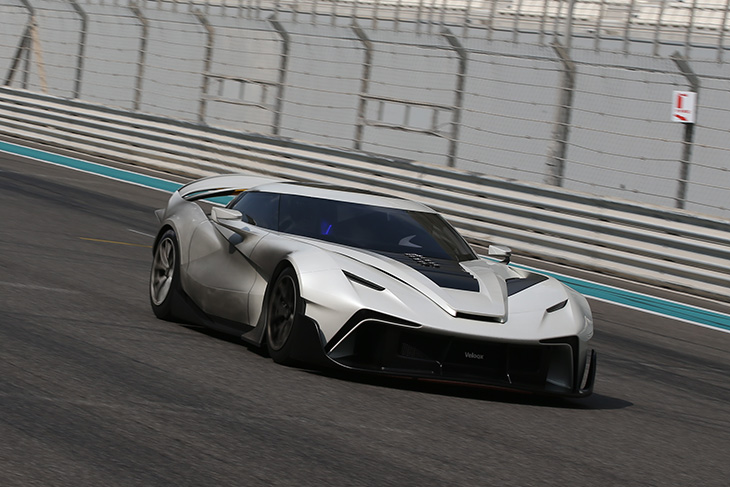
There, the team behind the idea to field a road-car-based LMH ran what appeared to be a Ferrari-based front-engined supercar in front of an invited audience.
The car comprehensively destroyed its brakes and little or nothing was heard thereafter from an outfit that had, at one point, seemed set to employ ex-Audi Sport engine guru Ulrich Baretzky.
Ferrari
Ferrari’s 499P is the first top-class sports prototype to be fielded by the factory since 1973.
An entirely in-house designed project by Ferrari – including a Ferrari-designed chassis built for the factory by Dallara, the team fielded a two-car factory effort from the 2023 season under the Ferrari AF Corse banner.

The #50 car scored a shock pole position for Antonio Fuoco on the car’s debut in Sebring in 2023 and a run to the podium, one of four in the season for the car en route to third in the Drivers’ Championship.

The sister #51, meanwhile, had only two visits to the podium. But one of them was the car’s first win, and it came at Le Mans, in the centenary year for the Great Race. James Calado, Alessandro Pier Guidi and Antonio Giovinazzi earned themselves legendary status in Ferrari history in the process.

2024 saw no change to the factory effort but a major change with the addition of a third car, the #83 entered as a privately fielded AF Corse car in a reverse factory livery for Robert Kubica alongside Ferrari factory drivers Ye Yifei and Robert Shwartzman.

The privateer car would take an overall win at CoTA, but the season highlight came with a second Le Mans win, this time for the #50 car of Antonio Fuoco, Miguel Molina and Nicklas Nielsen. That result would play an enormous part in the #50 crew finishing second in the Drivers’ Championship, with the #51 trio scoring only a single podium finish, at Le Mans, with more than one potential strong result falling victim to poor strategy (in particular at Imola) or poor luck (Spa!).
Into 2025 and all three cars returned, albeit with Shwartzman (IndyCar-bound) replaced by Phil Hanson in the #83. The 499Ps dominated at Qatar, a 1-2-3 with the #50 taking the first non-Le Mans win for a factory car. Both Imola and Spa saw wins for the #51.

Le Mans saw all three very competitive, the #83 coming home for a famous win, the #51 third, and the #50 eventually disqualified from fourth. The car failed post-race scrutineering due to missing bolts from the rear wing support, which allowed rear wing deflection beyond the permitted tolerance.

Worthy of note too is that Ferrari has seen fantastic return on investment from its WEC programme, not least because of the launch in 2023 of the 499P Modificata, and unrestricted version of the Hypercar.
It’s not eligible for racing but with full-time Hybrid, ‘push to pass’ boost and a price ticket (including two years trackside support) of over 5 million Euros.
More than 20 have already been delivered to their lucky customers, with a similar number of additional orders understood to still be in the pipeline.
FIA
The Federation Internationale de l’Automobile is the world governing body of motorsport.
It provides the regulatory framework that underpins the safety, technical parity and sporting standards for the FIA WEC.
The body also provides the driver ranking system, circuit certification, race control and stewarding staff and training.
The FIA and ACO collaborate on various matters, including the Balance of Performance systems for the FIA WEC, and work closely with IMSA’s technical team.
FIA WEC
The FIA WEC (World Endurance Championship) commenced in 2012 as a joint venture between the FIA and ACO, managed and promoted by LMEM.

The top class of the WEC transitioned from LMP1 to Hypercar from the 2021 season. In 2025, Hypercars race alongside production-based LMGT3 cars in a two-class championship, with LMP2 joining for the Le Mans 24 Hours.
All full-season FIA WEC-entered cars are accorded an assured entry to the 24 Hours of Le Mans, which also serves as a double-points-scoring round of the FIA WEC.
Championship-winning drivers and manufacturers are accorded full World Champion status from the Hypercar class. The championship also has a Hypercar Cup for privateer entries.
Ford
The Blue Oval is another industry giant which had at least two sniffs around the ruleset tree before committing earlier this year to a programme to join the FIA WEC in 2027 with an LMDh Hypercar based on an ORECA spine. Whilst turbo power is the default option in Hypercar, some sources suggest that Ford may opt to go toe to toe with its GM rivals with a normally aspirated V8!
It is set to become Ford’s first top-class effort at a global level in sports cars since the Group C C100.
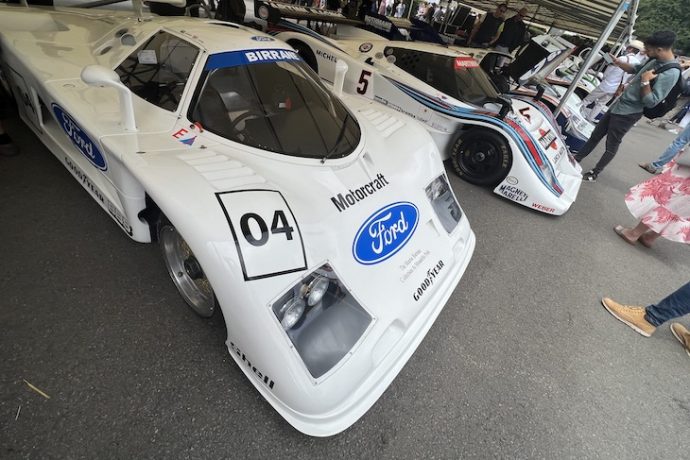
Ford initially looked at Hypercar and GTP while the plans for convergence were in their early stages, before deciding instead to focus on a GT3 platform with the Mustang platform.
A later evaluation was shelved as the brand decided instead to fund an F1 engine programme before finally deciding to join the flood of manufacturers looking at Hypercar.
Ford has not yet announced its selected service provider, but it is understood to be in negotiations with a team currently servicing an existing WEC Hypercar outfit. It has also hired Dan Sayers as its programme manager.
There’s no word yet on whether an IMSA GTP programme will come together for Ford’s challenger. As its motorsport boss Mark Rushbrook points out: “We’re already present as a factory team in IMSA, racing with the Mustang in GTD.”
However, should it opt to run parallel programmes in the future, Rushbrook previously told DSC that its WEC service provider would need to be capable of operating cars on both sides of the Atlantic. It doesn’t want to work with a second team based in North America.
Fortescue Zero
See Williams Advanced Engineering.
Ganassi Racing
Ganassi lost out after piloting both the WEC and IMSA Cadillac programmes as a factory service provider.
Currently, without a programme, the US giant is known to have courted a number of potential clients, including BMW, Ford, and Genesis.
See Cadillac.
Geely
See Lotus.
Genesis
The ‘halo’ luxury and performance brand of South Korean giant Hyundai is set to use sportscar racing as an important element in a global boost for the brand.
After evaluating nearly every option on the global motorsport scene, Hyundai/Genesis settled on Hypercar and GTP and is set to enter the WEC in 2026 with a two-car team, featuring the forthcoming GMR001 under the Genesis Magma Racing banner, directed by Cyril Abiteboul.
The car is based around an ORECA ‘spine’ (joining Alpine, Acura and Ford on the ORECA customer list) and powered by a Pipo Motors turbo V8 developed from the Hyundai WRC rally engine – effectively a pair of four-cylinder engines mated together.
The WEC team is set to be based in Signes, southern France, on the technoparc adjacent to Circuit Paul Ricard in a new facility designed and built by IDEC Sport.
For the WEC, the effort will be run by an in-house factory team. To prepare for that, Genesis is collaborating with IDEC to field an LMP2 ORECA in the 2025 ELMS, principally to allow incoming crew members to familiarise themselves with the endurance racing discipline, and, not inconsequentially, the rulebook!
The team is set to move into its new HQ this summer (July is planned), with the track debut of the first development, GMR001, soon afterwards.

The full-size visuals of the car were revealed just a few weeks ago, and the engine, despite some reported difficulties, had its first bench fire-up just a few days later.
For the US programme, there is an active selection programme to select a service provider to support the IMSA effort. DSC is aware of the shortlisted parties who do not, at this point, include Ganassi, an early tip for the role.
There is still a possibility, if the programme goes well, that the Genesis could be seen in some late 2026 IMSA races, but indications are that the timelines across the board for Genesis are proving to be challenging
Gibson
Gibson Technology’s sonorous 4.5 litre GL458 normally aspirated V8 powered the now-parked Alpine A480 and continued in the ‘Vanwall’ Vandervell 680 as a much-upgraded version of the very familiar GK428 4.2 litre engine, which is the spec unit for LMP2 worldwide.
The ByKolles-run effort pointed to the unit being down on power in BoP’d form, something that the team was well aware of, before public pronouncements of a switch to the ex-Glickenhaus Pipo engine in which form the car has never raced.
Ginetta
There was a fleeting possibility that the British outfit might register its G60 LMP1 car as a grandfathered 2021 Hypercar. The notion was not progressed.
The brand has instead focused on relaunching its LMP3 programme in recent years to coincide with the 2025 refresh for the category’s regulations.

Glickenhaus
Jim and Jesse Glickenhaus provided some early competition for Toyota (and Alpine) with their very pretty, retro-styled SCG 007 LMH Hypercar.

Initially designed to be powered by an Alfa Romeo turbo V6, the early regulations’ changes following the addition of the Aston Martin Valkyrie led to a search for a different engine. Ironically, the withdrawal of the Valkyrie and the subsequent convergence process would likely have rendered the Alfa unit fit for purpose, but by then, the outfit had committed to a new-build twin-turbo V8 from rally and race specialists Pipo Moteurs.
The SCG 007 raced for three partial seasons, in conjunction with Joest Racing. The effort’s highlights included scoring pole position twice in the WEC and finishing on the podium four times, including at Le Mans in 2022, where the team’s two cars achieved a 100% finishing record across its six entries over three years, with a lowest overall finishing position of seventh.
The second car, raced as #709 three times at Le Mans and in selected WEC races, is owned by Glickenhaus customer and dealer HK Motorcars.
After Monza in 2023, Jim Glickenhaus made it clear that he had neither the budget nor the inclination to chase the development curve of the increasing number of major manufacturers. The cars missed the flyaways that year, and, after attempts to find major sponsorship proved fruitless, the cars were not entered for the 2024 championship.
There was a potential way forward for the Glickenhaus / Pipo turbo V8 with ByKolles suggesting that they were redesigning their Vanwall LMH around the unit, but this programme never emerged.
Green GT
Named as the powertrain supplier for the proposed, but currently delayed, Hydrogen fuel cell top-class ruleset, Green GT has been involved in hydrogen tech for several years. Its prior and current projects include both a delayed Garage 56 car and involvement with the ongoing H24 technology demonstrator.

GTP
IMSA’s GTP (Grand Touring Prototype) class is the umbrella for the combined LMDh, LMH formula that sits atop the IMSA WeatherTech Sportscar Championship class structure.
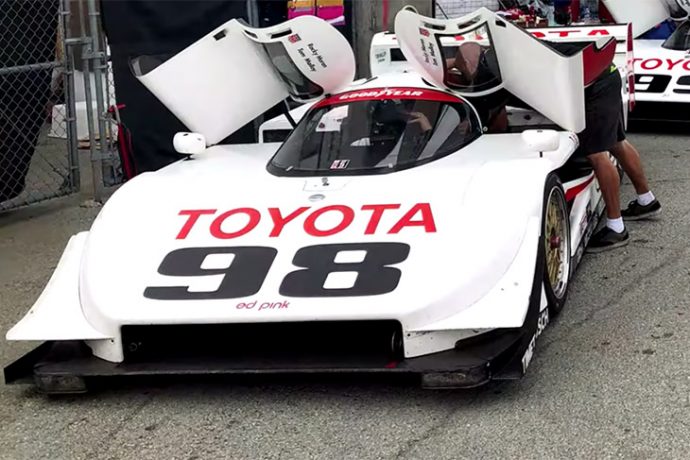
The GTP moniker is a historic one, harking back to a previous golden era in the 1980s and 1990s, when IMSA’s version of the then-dominant Group C rulebook was given the GTP moniker.
GTP operates under an IMSA rulebook, but with significant parallels to the FIA/ACO Hypercar ruleset.
Honda
If the Acura ARX-06 were to race at Le Mans, it would need a full-season FIA WEC entry. And that would likely be under the Honda brand (Acura is a North America-only brand).
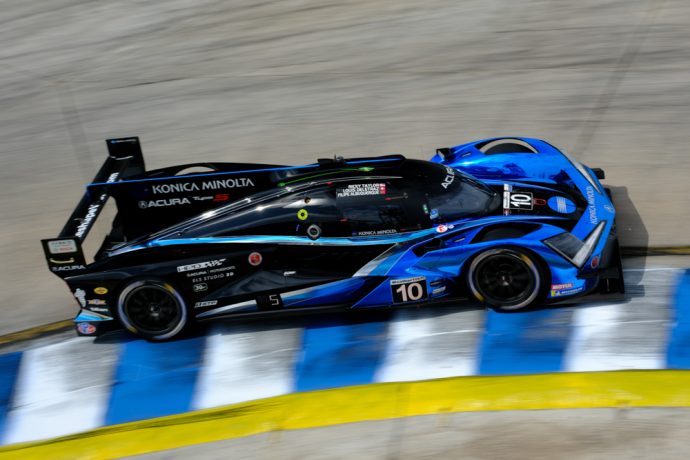
DSC is aware that more than one WEC team has investigated the potential for a Honda programme without success. As noted in Acura above, customer cars are not expected to feature for some time yet.
The advent of the new-for-2024 HRC US (see below), however, gave some new impetus for a future effort, with senior industry voices now openly discussing interest. At least one recent interview, however, suggests that Honda in Japan shows no interest.
(See Acura)
HPD
Honda Performance Development in the USA was behind the design and build of the high-revving 2.4-litre twin-turbo V6 that powers the Acura ARX06, the engine initially designed to do double-duty in GTP and IndyCar before a volte-face by the single-seater series.

HPD was renamed as HRC US for 2024 and now sits alongside its Japanese parent company as a centre of excellence on its continental and global programmes.
HRC
Honda Racing Corporation is the entity which would be responsible for any potential future FIA WEC Hypercar programme, most likely in collaboration with its HRC US subsidiary, which designed and built the current Acura ARX 06 GTP machine.
HWA
The German engineering outfit (and former DTM stalwart) was commissioned by Isotta Fraschini to produce both the internal combustion engine and the hybrid drive electric motor for its Tipo 6 Hypercar.
The 3-litre turbo V6 is understood to be based on a VAG production unit but heavily reworked for racing.
Hypercar
Now, simply the class title for the top level of the FIA WEC, the term has had a slightly confusing evolution.
Initially intended as a class populated by an earlier iteration of the current LMH (Le Mans Hypercar) regulations, the class evolved into a broader definition after the convergence process was confirmed in 2020, and now encompasses LMDh machinery, as well as hybrid and non-hybrid cars built to LMH regulations.
Hyundai
The Korean giant is known to have evaluated developing cars for both LMDh and the currently paused Hydrogen Fuel Cell regulations. The latter looked, for some time, to be the most likely entry point for an entry into the sports prototype marketplace.
The move, though, came with a decision to focus on the company’s newer Genesis halo brand, now confirmed for 2026 in the FIA WEC and 2027 in IMSA with the ORECA-based GMR001 LMDh.
(See Genesis.)
IDEC Sport
The Lafargue-family owned, Nic Minassian-managed team is working hand in glove with the Genesis Magma Racing operation with its 2025 ELMS LMP2 preparatory programme.
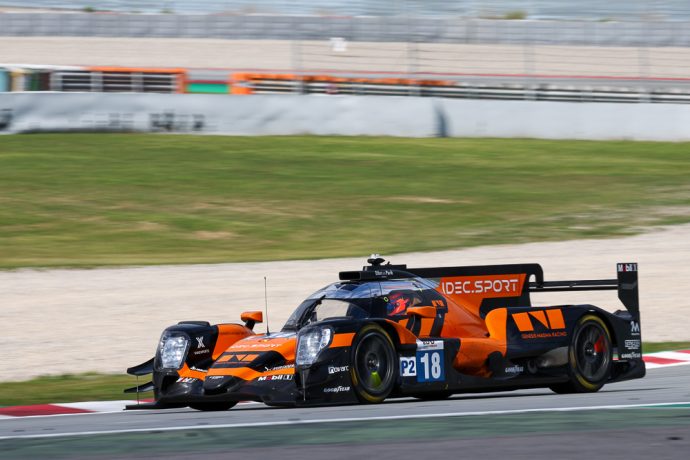
The new Genesis race team HQ is on the same Signes plot as IDEC Sport, and inevitably, there will be some ongoing bonhomie, though a role for the team in running the factory programme, or a customer car, seems not to be in immediate prospect.
IMSA
The International Motorsports Association is owned by NASCAR under founder Jim France, operated under President John Doonan and based in Daytona Beach, Florida.
IMSA sanctions and operates the IMSA WeatherTech SportsCar Championship, with its regulations featuring GTP as the premier class.
It also partners with the ACO (See ACO) on several strategic regulatory matters, including the converged Hypercar/GTP rulesets, LMP2, and LMP3.
IMSA WeatherTech Sportscar Championship
NASCAR-owned IMSA’s premier sportscar racing product in North America.

Operating at road and street courses across the USA (plus CTMP in Canada for a currently LMP2-headlined race meeting), the championship features GTP as its premier class. It’s a series composed of endurance and sprint racing with mixed grids of prototype (GTP and LMP2) and production-based (GTD Pro and GTD) machinery.
The championship is one of only two non-ACO-operated series (and the only one for the top class) that allows cars to gain an entry to the 24 Hours of Le Mans.
Isotta Fraschini
The Isotta Fraschini Tipo 6 LMH made its debut in the FIA WEC in 2024 after a ‘dynamic debut’ at the WEC Monza race meeting in 2023, with quite a back story. The effort was initially conceived as part of a start-up for a bespoke EV manufacturer with a famous old brand name.
Then COVID happened, and the initial plan stalled. The plan, though, was rejuvenated with an all-Italian leadership group headed by ex-Ferrari, Maserati and Lotus motorsport boss Claudio Berro.
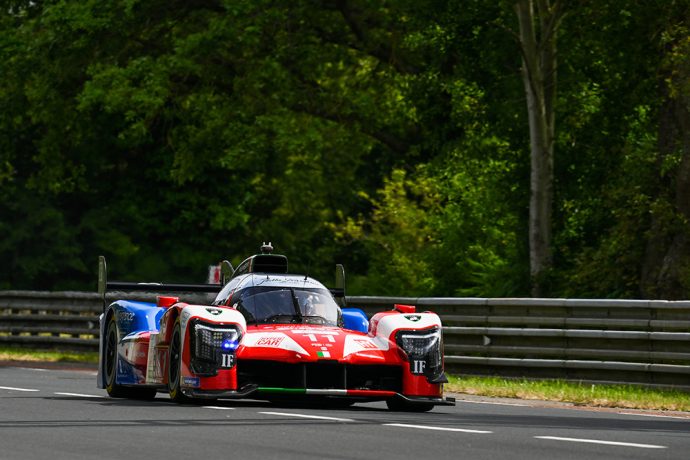
The car was designed and built by Michelotto at its headquarters, to LMH regulations with an HWA-designed and built internal combustion engine and a bespoke hybrid drive system driving through the front axle.
Isotta Fraschini also showed both a ‘Pista’ track-only version and a ‘Stradale’ road-legal car, too.
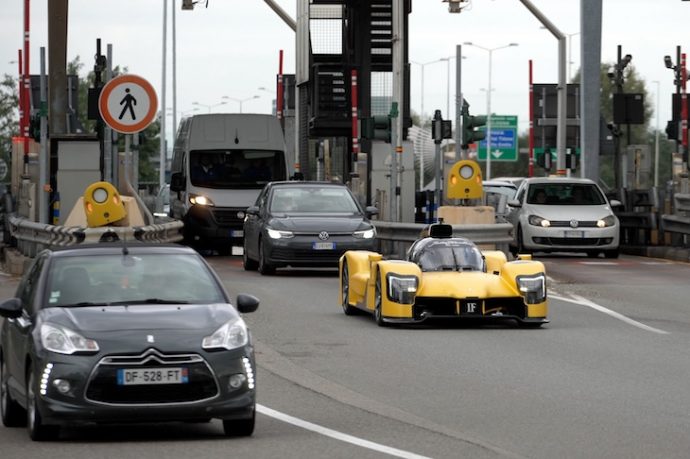
British team Vector Sport was initially appointed as service provider in the FIA WEC, having won the opportunity to do so against stiff opposition from JAS Motorsport, Joest Racing and Emil Frey Racing.
But that deal was sidelined after Duqueine Engineering made a counteroffer. The car debuted (with Duqueine support) at Qatar in 2024 with two young and inexperienced drivers alongside development driver Jean-Karl Vernay.
Thereafter, the car completed the European races and raced at Interlagos, showing flashes of potential but with no points-scoring finishes.
Despite public statements of the outfit’s readiness to commit to the new-for-2025 ‘two car rule‘, it became clear that the financial position for the effort was far from healthy.
The car was withdrawn from the remainder of the season, and despite efforts to find new sources of funding or to interest teams in purchasing the car, there is little or no prospect of a return to the FIA WEC.
Whilst the option to join the recently announced Pro-Am Privateer class in the Asian Le Mans Series offers a glimmer of hope, it is very far from a certainty.
Jaguar
Parent company Tata was involved in the initial industry round of technical meetings to develop the Hypercar ruleset, with Jaguar, the most prominent brand in its portfolio, stepping in.
That interest, though, was fleeting. No programme is live across the group.
JDC Miller
See Porsche.
Joest Racing
See Glickenhaus and Isotta Fraschini.
JOTA
See Porsche & Cadillac.
Koenigsegg
Christian von Koenigsegg spoke in the early days of the Hypercar regulations about the potential for his Swedish supercar company to take a look at the prospects for racing.
That has not progressed to a firm programme, but DSC did see an early road-car-based LMH concept drawing from within the company.
Lamborghini
The VAG-owned Italian supercar maker joined IMSA and the FIA WEC in 2024 after a test programme from Summer 2023, with a single factory-entered SC63 LMDh car featuring a Ligier chassis and powered by a Lamborghini-developed twin-turbo V8.
The factory team, supported by Iron Lynx / Prema, was entered for a full season in the FIA WEC Hypercar class and the GTP class for the IMSA SportsCar Championship’s Michelin Endurance Cup, both with a single SC63.
The effort doubled up for a two-car entry for Lamborghini’s first-ever top-class entry for the 24 Hours of Le Mans in 2024, scoring a top 10 finish, one of only three points finishes in the Manufacturers World Championship, with just two points finishes in IMSA, with a best of seventh at Sebring.

Poor form exposed developmental needs for the car after a rushed homologation process, following the team’s test car being destroyed in an early programme accident at Paul Ricard.
After initially indicating that the effort would return with two cars in 2025 to the WEC, unhappiness within Iron Lynx with issues affecting both the Hypercar and GT3 programmes, a change in senior management at Lamborghini, and the scale of work needed with the car saw the effort implode post-season.
Lamborghini would eventually opt for a single-car effort in the IMSA Endurance Cup only in 2025, as its regrouped, with a very late appointment of Riley Motorsports as a service provider and poor form at Daytona didn’t help matters either.
Add into the mix a currently ongoing legal case where Prema alleges that its proprietary software and set-up data were taken by Lamborghini and supplied to incoming service provider Riley, and it’s been a somewhat sticky wicket for the programme.
Senior management has indicated a potentially customer-led approach beyond the current season. There are signs that the development work required, primarily focused on weight reduction and a revised aerodynamic package, will be undertaken later this year, provided the board approves the necessary budget.
Lexus
Lexus has evaluated an LMDh project more than once for IMSA, but has repeatedly opted to stay with the GTD (and GTD Pro) platform with the incoming new car to replace the current RC F GT3.

DSC understands that Toyota in North America also at least considered a programme featuring a single GR010 LMH car, but this too was not progressed.
Ligier
Involved with the Peugeot 9X8 programme as a carbon fibre component supplier and aero design consultancy, the French chassis maker gained its first LMDh customer with Lamborghini, supplying the ‘spine’ for its 2024 SC63.
LMDh
LMDh (Either Le Mans Daytona Hybrid or Le Mans Daytona Hypercar, depending on who you ask!) is one of two separate technical rulesets that produce cars eligible for both the IMSA GTP and FIA WEC Hypercar classes.
LMDh was produced as the successor to IMSA’s DPi (Daytona Prototype International) class by IMSA, based around four available chassis/ spine suppliers (Dallara, Ligier, Multimatic and ORECA) that were initially intended to do double duty as the next generation of LMP2 chassis.
The latter plans were counted out in 2024 with a replacement ruleset for LMP2 from 2028 now established.
LMDh cars utilise a ‘spec’ hybrid drive system, with Bosch, Fortescue Zero, and Xtrac providing the key components for all LMDh cars’ hybrid drive systems.
The OEM concerned can then select the ICE (Internal Combustion Engine) of their choice, along with brand-specific aero and bodywork.
To date, Acura, Alpine, BMW, Cadillac, Lamborghini and Porsche have raced LMDh cars with Genesis arriving in 2026 and Ford and McLaren set to follow in 2027.
LMEM
Le Mans Endurance Management is a company set up by the ACO to operate and promote the FIA WEC as well as a range of other Series.
Based in Paris and Le Mans, and operating under CEO Frederic Lequien, it is tasked with organising the race meetings, developing calendars and rulesets, selecting competitors, communicating, promoting, managing logistics, and overseeing nearly everything else that goes into running a World Championship.
LMH
LMH – Le Mans Hypercar, is one of two different sets of technical regulations against which a car can be built to compete either in the FIA WEC or in the IMSA WeatherTech SportsCar Championship.
LMH cars can be standalone racing prototypes or derived from roadgoing ‘hypercars’; they can have hybrid or non-hybrid powertrains, and the hybrid can deploy on either the front or rear axle.
Chassis, bodywork, and powertrains can be built to order for the cars. LMH cars are not powered by the LMDH single-source hybrid powertrain.
Toyota (GR010), Peugeot (9X8), Ferrari (499P) and Aston Martin (Valkyrie LMH) all currently race cars to LMH specifications.
Glickenhaus (SCG007), Isotta Fraschini (Tipo 6 Competizione), and ByKolles/Vanwall (Vandervell 680) have all previously done so.
Lola
The revived Lola marque has expressed interest in a role in the top class (and LMP2), though how and when that might happen is not yet clear.
It is perhaps less likely to see a bespoke Lola chassis involved, but rather the company might seek a route into the market where it can work with multiple OEMs through its developments in advanced tech and design capabilities.
Lotus
Indications were that Lotus might be collaborating with Alpine on a Hypercar programme, which proved to be a false rumour. But the brand was in the mix when parent company Geely sat around the table for early industry meetings to determine the shape and direction of the Hypercar regulations.
Interest was understood to be defunct as of two years ago, but a lot has happened over the past 24 months. Could Lotus, or another arm of Geely, prove to be a prospect for the future as the expansion of Hypercar to the Asian Le Mans Series picks up steam?
Marelli
A key technical partner on Peugeot’s 9X8, Marelli provides the electronics and high-voltage electrical systems for Peugeot’s hybrid drive.
Maserati
Yet another Stellantis brand that is believed to have evaluated Hypercar. However, the Italian supercar maker decided to focus on a mix of Formula E and a GT2-spec MC20 instead.

McLaren
The ‘will they/won’t they?’ storyline around McLaren in Hypercar was finally progressed with the confirmation that the UK supercar maker will field a Hypercar entry in the FIA WEC.
That effort will commence in 2027 with an LMDh rules car based on a Dallara spine.
There’s still plenty to be announced about the effort, which has been rumoured, discussed, and speculated about almost since the LMH and LMDh regulations were unified.
It is well known that McLaren initially collaborated with ORECA on evaluating an LMDh car concept, which was completed at the same stage three years ago.
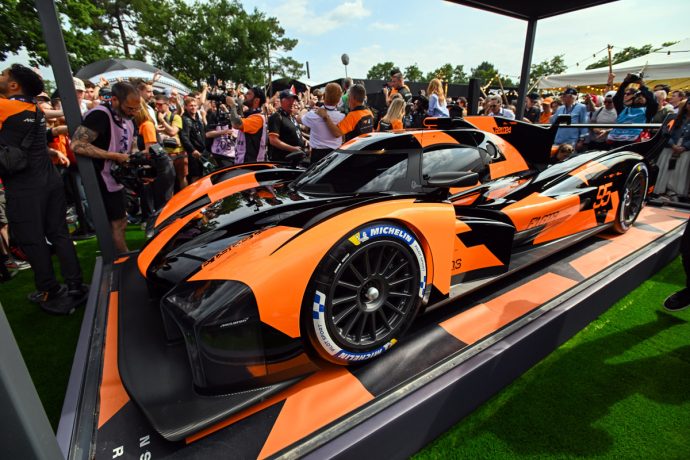
Also confirmed is that United Autosports will serve as the FIA WEC service provider, the cars set to be based at its Yorkshire, UK HQ.
The engine is set to be a McLaren-badged turbo V6, designed by McLaren and built by Italian outfit Autotecnica Motori.
Also, it is now clear that McLaren is looking to find private investors in the car ownership for its WEC programme, with a parallel programme featuring a track-only customer version of the racing LMDh car.
This programme offers owners access to the development of the race car, alongside curated and exclusive track days for their own track car.
Mecachrome
The French specialist engineering concern was responsible for designing and developing the 3.4-litre turbocharged V6 engine for the 2024 Alpine LMDh car.
Following reliability issues at its debut at Le Mans in 2024, the engine underwent revised management strategies for the remainder of the season.
Alpine then utilised one of its homologation EVO Jokers to update it for 2025, before moving the entire engine operation in-house post-Le Mans.
Mercedes-AMG
Despite numerous rumours of a racing version of Mercedes-AMG’s extraordinary, F1-powered AMG One supercar, no programme emerged.

That’s not the end of the story, though, as well-placed sources have consistently claimed that Mercedes-AMG has had discussions around a programme potentially targeting Hypercar and GTP, with opinions divided on whether the LMDh or LMH route is the favoured option.
Whilst the current Mercedes AMG Customer Racing operation has expressed no knowledge of such a programme, those same sources have insisted that interest from the brand is still active.
That leaves several possibilities aside from an unauthorised fishing expedition!
Is it possible that the parent Daimler Benz operation is in discussions, or is the somewhat more likely prospect that the standalone F1 operation is looking to follow Ferrari, McLaren, Alpine and Aston Martin down the road of retaining in-house technical capabilities within an F1 cost-cap?
Whatever the truth of the matter, DSC is sticking by its initial story that Mercedes-AMG has been actively evaluating an entry.
Meyer Shank Racing
See Acura.
Michelin
Tyre supplier for both the IMSA GTP class and the FIA WEC’s Hypercar class.
In WEC, the teams have two dry weather choices for 2025: Soft for average-wearing or ‘rubbered’ track surfaces, temperatures in excess of 15°C and Medium for abrasive track surfaces, demanding track configurations, temperatures in excess of 30°C.

In IMSA, meanwhile, only one compound is used at each event, except at Daytona, where two options are available, with one exclusively used overnight during the race.
Both championships have a single wet-weather tyre, with no intermediate option.
For 2026, an entirely new range of dry weather tyres is coming with higher proportions of renewable materials and better ‘warm-up’ qualities from cold.

The testing programme for those tyres is complete, and production is set to begin over the summer before testing with the frozen final specifications resumes in Q4 of 2025.
Michelotto
Previously involved in the Ferrari GT build programme, Michelotto became the primary technical partner for the Isotta Fraschini Tipo 6 LMH. The cars were being built at a dedicated facility within Michelotto.
Multimatic
The Canadian industry giant provides the ‘spine’ for the Porsche 963 (plus the now-defunct Audi) and delivered well over 20 such chassis for future customer orders, factory cars and spares within a year of the start of the 963 programme.
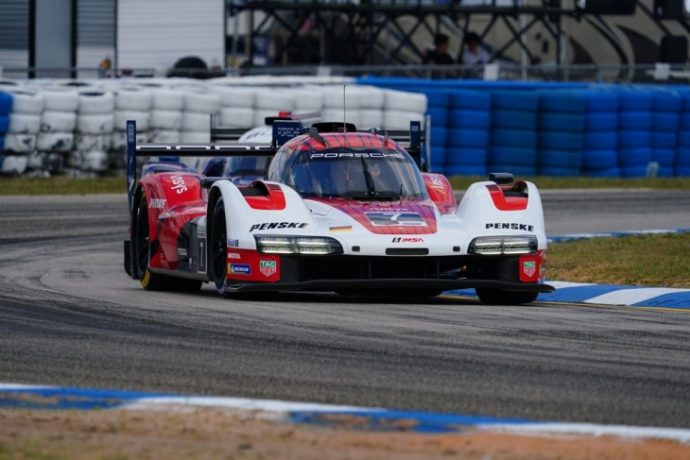
At least one of the now-dead Bentley projects would also have involved the Multimatic chassis.
Multimatic was also heavily involved in the original Aston Martin Valkyrie LMH programme and built the AMR Pro versions of the car, effectively, at least in part, a non-BoP’d version of the Hypercar project.
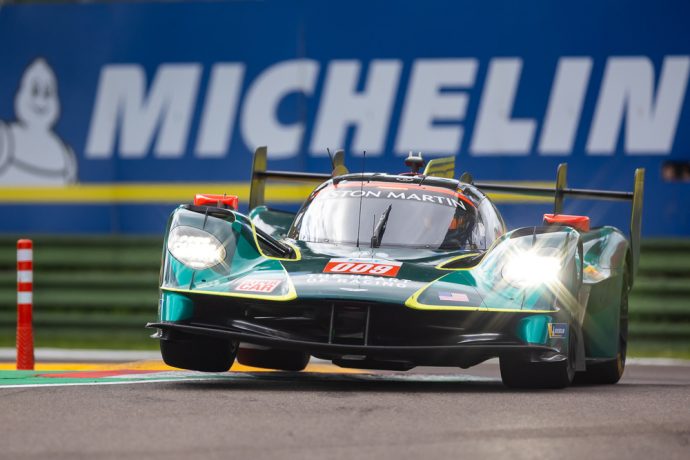
It also had a hand in the development of the current version of the Valkyrie LMH, with the in-house race team heavily involved alongside The Heart of Racing in running the cars in both the WEC and IMSA.
Nissan
Whilst no interest in Hypercar has been announced or confirmed by Nissan, DSC is aware that senior management was in contact with a number of teams and industry bodies in the first year or two of the ruleset to investigate the marketplace.

And that interest is still very much alive. DSC is aware of current moves that might reasonably be defined as a formal evaluation.
Might the Japanese giant be set to shrug off the recent controversy of an abandoned merger with Honda by embarking on their first top-class sports car programme since the ill-fated GTR LM of 2015? It seems improbable, but not impossible.
ORECA
The French motorsport industry giant undertook both LMDh and LMH concept commissions and is currently building LMDh ‘spines’ for both Acura and Alpine, with Genesis’s GMR 001 also set to feature ORECA underpinnings.
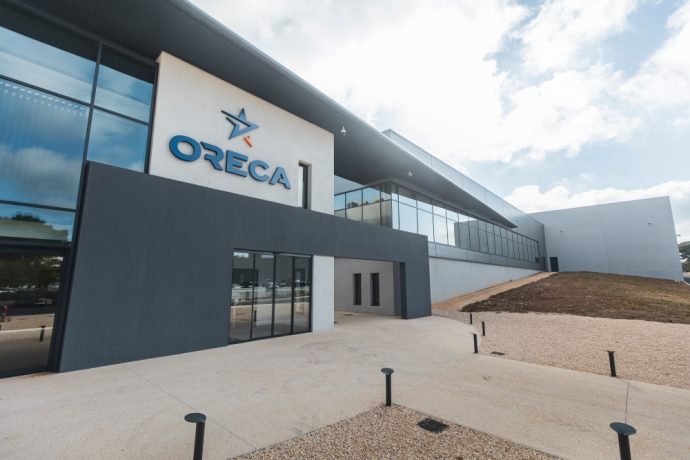
Ford has also confirmed that it will use ORECA’s spine for its 2027 LMDh car.
ORECA is known to have undertaken concept work for McLaren, though the Woking brand has chosen Dallara.
Pescarolo
See Peugeot.
Peugeot
The return to the top class with the radical ‘no rear wing’ 9X8 saw Peugeot’s first entry into the FIA WEC after their last-minute withdrawal prior to the start of the championship in 2012.

The car was greeted with huge enthusiasm for its unique style, but struggled for reliability in its part-season in 2022 (the team ran the three races post-Le Mans) and at Sebring in 2022.
The team replaced its troublesome electronic gearbox actuator with a hydraulic system in early 2023. While the car showed flashes of competitive form, particularly at Le Mans and with its only podium finish at Monza in 2023, it rapidly became clear that the radical concept was a bust. A significant redesign was soon in the works, featuring a far more conventional aero package.
That car debuted after a final hurrah for the outgoing car at Qatar in 2024, where, ironically, the ‘old’ 9X8 ran competitively before running out of fuel late in the race.
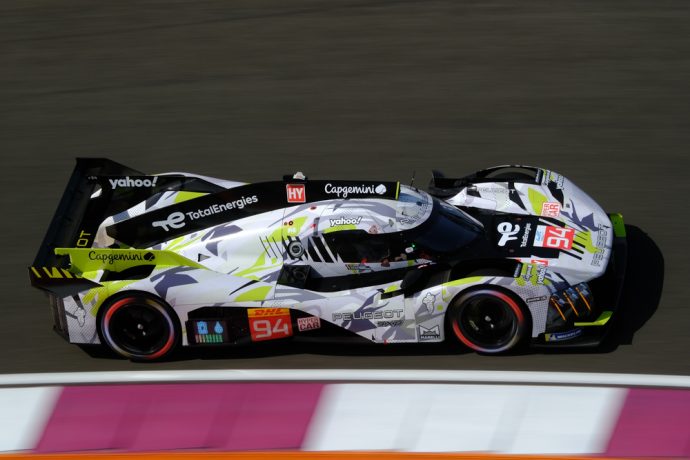
Sadly, the redesigned car was off the ultimate pace, though significantly more reliable. A single podium finish at Bahrain in 2024 is thus far the only podium finish for the car.
Despite the programme’s travails, Peugeot seems set to commit to a longer programme with a new car at some point in the near future (potentially from 2027), and the Stellantis board is understood to have green-lit a Peugeot continuation at the expense of a potential Alfa Romeo replacement.
There was reported interest in a privately entered 9X8 from the new (and entirely unconnected with Henri) Pescarolo effort for 2023.
Despite significant media attention on the effort, there was never a realistic prospect of the team gathering enough of the one resource they lacked: money.
Pipo Moteurs
The French engine specialists, multiple World Championship winners in WRC and World Rallycross, provided the 3.5-litre twin-turbo V8 that powered the Glickenhaus 007 LMH, the engine based on the architecture used in their successful four-cylinder turbo motors.
That engine was also claimed to be at the heart of a revised, but never raced, Vanwall LMH.
The new-for-2026 Genesis GMR 001, meanwhile, will use another version of the same Pipo concept, again a turbo V8 formed by marrying the core of a pair of WRC-like turbo fours.
Podium Engineering
The Italian concern is a long-term engineering partner to Glickenhaus and coordinated the design, and undertook the build of the SCG 007 Hypercars.
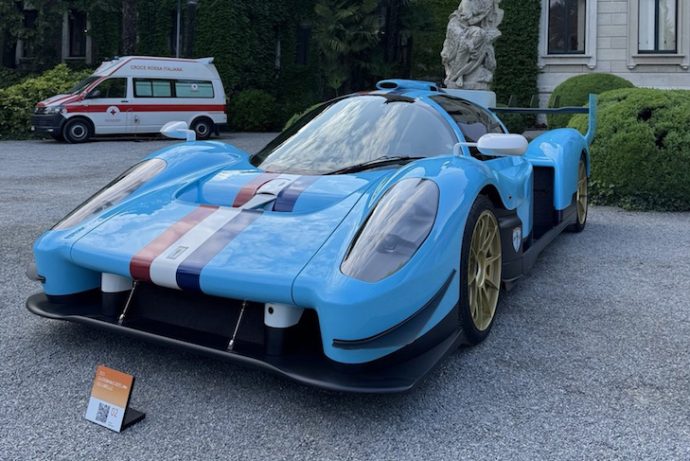
They are also building the road car derivative of the racing SCG 007, the 007S.
Porsche
Porsche’s 963 was an early adopter of the LMDh regulations based around the Multimatic chassis and a 4.5-litre Porsche turbo V8 based around the highly successful non-turbo engine from the Porsche RS Spyder.
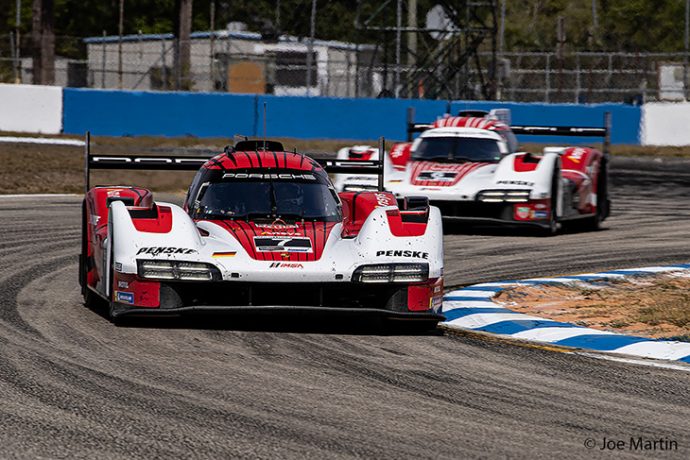
Porsche ordered c.30 Multimatic chassis with the majority delivered within the first few months of the programme for current or future test, race and/or spare chassis requirements (show cars do not require a full chassis).
The full factory efforts have been fielded by Penske Motorsport under the Porsche Penske Motorsport banner in both IMSA and WEC since the 2023 season. Two cars have taken on each championship full-time, with a third entered at Le Mans every year of the programme thus far.
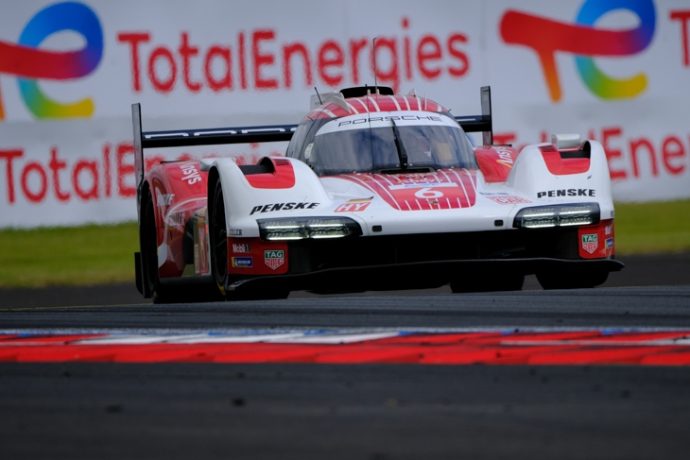
The factory programme in the FIA WEC produced just two podium finishes in 2023 before the effort took a big step forward for year two in 2024, two wins and three second-place finishes for one car, seeing Messrs Lotterer, Estre and Vanthoor take the Drivers’ title, the second car taking four podium finishes.
2025 has been a tough start, but the #6 car provided race-long competition to the eventual winning #83 Ferrari, finishing just 14 seconds behind in second place. This was after the car started 21st following a disqualification from qualifying.
In IMSA, three wins across the pair of cars in the first season were followed up with title-winning form in 2024. It was two wins apiece for the factory cars, including a win at the Rolex 24 for the eventual title-winning #7 crew, which secured the team a one-two finish in the drivers’ and teams’ Championships, the Manufacturers’ title, and the Michelin Endurance Cup.
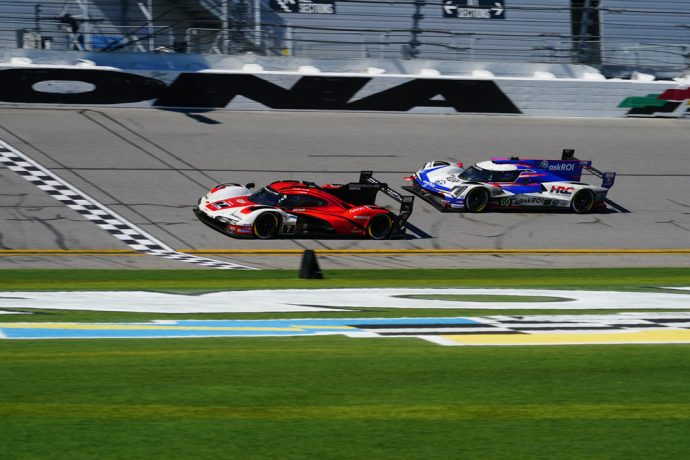
In 2025, the team started with a near faultless run, the #7 car unbeaten in the first three races (including a second consecutive win at Daytona and a first win at Sebring) whilst the second car finished third at Daytona and second at the two subsequent races! The second car then turned the tables at Laguna Seca in another one-two!
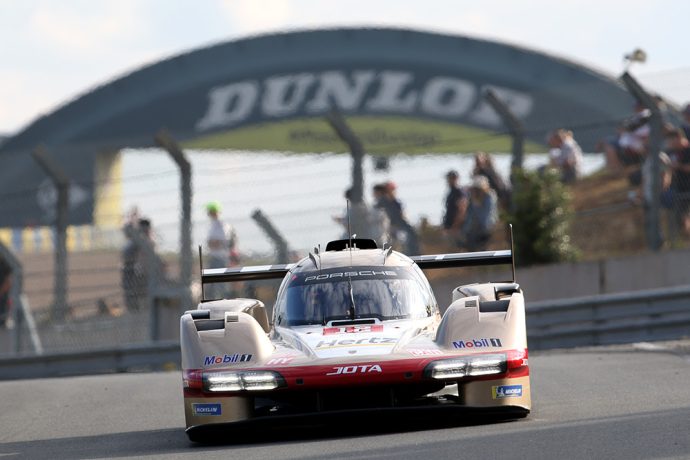
Porsche is the only manufacturer as of the time of writing to have sold customer Hypercars outside of the factory ‘family’ with three customer teams thus far and six.
First up was Hertz Team Jota with a single car joining the FIA WEC from round three at Spa in 2023. The team led the race at Le Mans that year and scored a (distant) finish. A fourth place overall at the Bahrain season finale was its best result of the season, but the results were enough to win the inaugural Hypercar World Cup for privately entered top-class cars.
Hertz Team Jota doubled up in 2024 and, after a fine second place in Qatar, took a Red Flag-assisted overall win at Spa with one car before form dipped. The downward trajectory began with Callum Ilott writing off a car at Le Mans in a practice session, forcing the team to rebuild a car from a spare, bare factory tub in under 48 hours. Both cars would finish Le Mans inside the top 10 overall, and whilst truly spectacular results were behind them, the team’s performance was enough to attract the attention of Cadillac. In 2025, it would switch to factory status with GM.
The Jota-run 963s, meanwhile, are unlikely to race again.
JDC Miller was the second customer team to race with a 963, its debut coming at Laguna Seca in 2023 with respectable rather than spectacular results. A pair of 4th places in 2023 was the best of a run of results that saw the car finish in the top eight at every race.
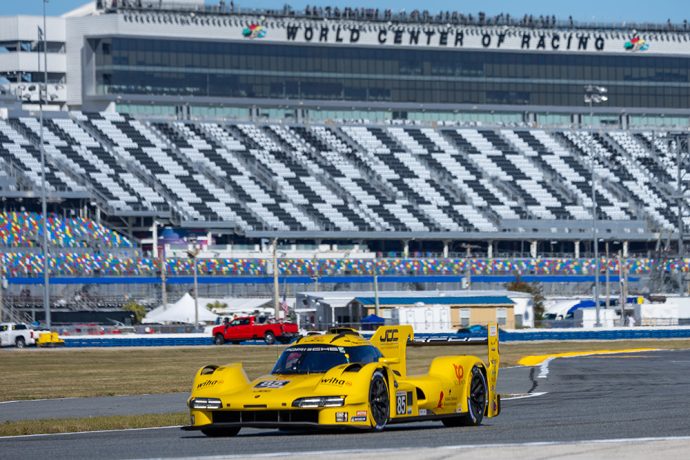
2024 saw a similar pattern, but with a first podium finish for the team coming at the Indianapolis 6-Hour race.
Into 2025, and the team looks set to field their second chassis, thus far used as a spare, as a second race entry – but whilst the initial notion seemed to be from from mid-season 2025 – that may now be somewhat delayed.
Proton Competition meanwhile joined the FIA WEC from Monza in 2023, with a second car contesting the final three IMSA races of the same season and scoring the first-ever overall podium finish for a privately entered Hypercar or GTP at Petit Le Mans that same year.

The single car per series programme continued into 2024 with full season entries in both, and a second entry applied for at Le Mans, which was given the first reserve list slot. Proton did not withdraw either its third Mustang or an LMP2 car, though, which would have guaranteed the 963 a Le Mans start.
IMSA saw no fewer than four fifth-place finishes, whilst in the WEC, the team’s #99 car struggled a little more with the deeper top-class field. A single fifth place at Spa came around a standout performance from Julien Andlauer that should have secured the team a podium slot, but their race was hampered by the long red fog that saw Jota claim the win.
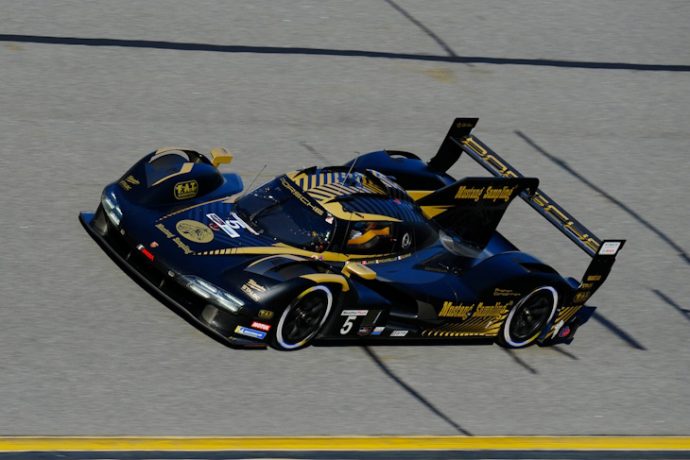
Into 2025, and Proton’s solo WEC car continues with the IMSA effort reeled back to a Michelin Endurance Cup effort only. The team is understood to be unhappy with a cooling of Porsche’s enthusiasm for supporting customer cars.
Once again, the team opted to enter a second car for Le Mans and, once again, it was listed as first reserve and didn’t race.

Porsche unveiled a (currently!) one-off road legal 963 at Le Mans, dubbed the 963 RSP, which is named for Roger Penske.
Pratt Miller
The US squad, long associated with the hugely successful Corvette Racing programme, is now seeking a parallel GTP programme and is understood to have been shortlisted for the US Genesis effort starting in 2027 and a more immediate potential change for the service provider of BMW. Though WRT looks to be in pole position to take over from RLL in the 2026 IMSA season.
Privateers
Entries are accepted in both FIA WEC and the IMSA Championship from non-factory-entered ‘Privateer’ cars.
In the WEC competition, their drivers score in the World Championship, but the team cars are scored in a separate ‘Hypercar World Cup’.
To date, the following teams have competed with non-factory Hypercar or GTP machinery:
FIA WEC:
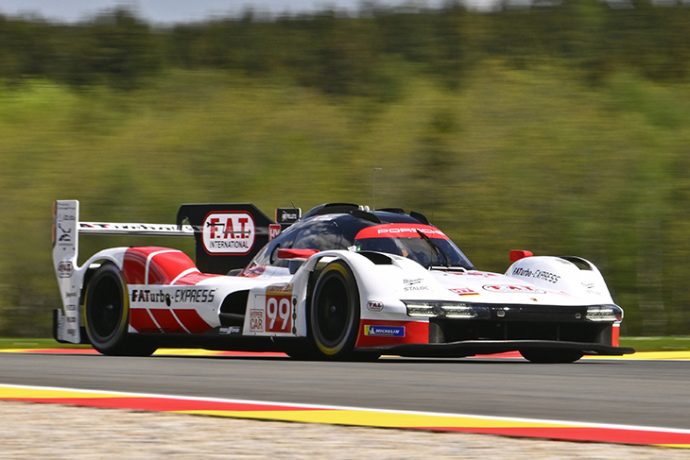
Hertz Team Jota – Porsche 963 (1 car in 2023, 2 in 2024)
Proton Competition – Porsche 963 (1 car since 2023)
AF Corse – Ferrari 499P (one car since 2024)
IMSA
Proton Competition – Porsche 963 (one car since 2023)
JDC Miller Motorsports – Porsche 963 – (one car since 2023)
Proton Competition
See Porsche
R Motorsport
See Aston Martin
Rahal Letterman Lannigan (BMW Team RLL)
See BMW
Rebellion
The Oreca chassised, Gibson-powered Rebellion R13 was repurposed by Alpine as a stop-gap Hypercar for the first two years of class competition in the FIA WEC.

‘Grandfathered down to the aero, weight and power output to allow closer competition, the car, dubbed the A480, scored a pair of overall wins in 2022 and took the championship chase down to the wire at the final round.
A single-car entry initially featured a car previously raced as a Rebellion. That initial chassis was replaced by a new one for Le Mans in 2022
Red Bull Advanced Technologies
Involved in the design of the Aston Martin Valkyrie and also with the proposed chassis (in conjunction with Oreca) for the currently stalled top-class Hydrogen Fuel Cell regulations. Repeated rumours of the organisation’s interest in Hypercar have thus far come to nothing.
Sadev
The French transmission specialist designed and built the gearbox for the Peugeot 9X8
Sauber (See WindShear)
Has been involved with aero consultancy and wind tunnel proving work with multiple programmes, including Glickenhaus, Isotta Fraschini and Vanwall.
The Sauber wind-tunnel was also the homologation-testing facility for the FIA WEC until the end of 2024, with its closure for upgrading ahead of the Audi F1 programme. All cars are now tested, and all data is gathered for both Hypercars in the WEC and GTP in IMSA at the WindShear facility in the USA.
Signatech
See Alpine
Software
An often overlooked but key area of permitted development, impacting powertrain, energy and tyre management and, in particular, on power delivery, braking and driveability.
Most manufacturers credit software development as their key tool in advancing the capabilities of their Hypercar/GTP machines.
Tata
See Jaguar
Team Penske
See Porsche
Torque Sensors
Or more accurately Torque meters, a key component of both the convergence, and BoP aspects of the current Hypercar/GTP formulae.
The devices, fitted to every driven axle, measure torque and are capable of relaying real-time data to technical observers, assuring them that the values applied by homologation, regulation, and by BoP adjustment are being complied with.
TotalEnergies
French Petrochemical and energy giant TotalEnergies provides the single-spec fuel for the FIA WEC.

Their TotalEnergies Excellium Racing 100, introduced in 2022, is a fuel produced from 100% biomass origin (from waste produced by the French wine industry.
The introduction of the new fuel promised to reduce ‘whole life’ greenhouse gas emissions from track vehicles by at least 65%.
TotalEnergies’ subsidiary SAFT provides the battery packs for the Peugeot 9X8.
Toyota
Toyota continues with the now most venerable of the Hypercar breed, the 2021 LMH-spec Toyota Gazoo Racing GR010 Hybrid.

The car has undergone significant updates since its 2021 debut, particularly in its second year, with 2023 also seeing updates for both handling and cooling.
A rollover of LMP1 experience in the design and engineering capabilities of the team, coupled with a well-drilled and experienced team in the garages and on the pit wall, has seen Toyota claim the manufacturers’ World Championship in every season of the Hypercar era thus far, albeit in drastically last-gasp fashion last year!
The Drivers’ Championship last year, though, went elsewhere, and so too, for the past couple of years, has the Le Mans win!
Balance of Performance has been pointed to by many as the core issue for the latter losses, but Toyota insiders recognise too that they have failed to deliver the faultless and trouble-free performances now required to take those wins.
The team desperately wanted the Le Mans win in 2025, but failed to feature in the race for the win.
The Toyota is still capable of duking it out with the best of the rest (as Antonio Fuoco found at Imola!), but the rumblings continue from Cologne that there are concerns about overall competitiveness and the Balance of Performance process currently in place.
For the future, Toyota has outlined a vision that would see the GR010, potentially updated, continuing for some time yet, possibly alongside the rollout of a proposed Hydrogen-Powered racer. However, with the likely delay of the ruleset to introduce hydrogen technology looming, that plan might be revisited.
Is Toyota still committed to the long-term in the class? It is currently very tough to call. At almost five seasons old, the GR010 is now at the beginning of a timeline that most would suggest requires consideration of a replacement. If Toyota continues to stick with its current platform with no indication of a replacement or significant update, then perhaps the drive is waning. The time for a medium-term decision is closing in.
As for the expansion of the programme, there was some early interest in evaluating a potential IMSA programme with a single GR010, but that prospect has since disappeared. Toyota has expressed, privately, interest in adding a race run at Daytona, again, though with no certainty of a programme emerging. DSC understands that Toyota hasn’t fully explored the costs and work involved in converting its GR010 for IMSA GTP competition.
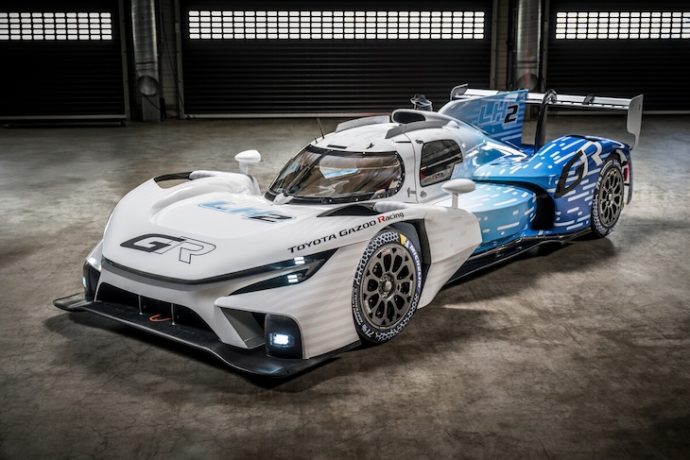
At Le Mans in 2025, Toyota unveiled a technology demonstrator, the GR LH2, powered by liquid hydrogen and based around a GR010 chassis that was described as being close to track-ready.
Tyrrell
The famous British F1 team’s brand was an early target for the ByKolles organisation. For reasons unknown, it switched its focus to the even earlier Vanwall brand.
Vanwall
After a number of efforts over the past decade in LMP2 and later LMP1 under a variety of monikers with very limited success, Colin Kolles’ ByKolles team, via an associated company PMC GmbH, registered the Vanwall trademark in Germany ahead of a Hypercar programme aimed at the WEC in 2022.

Whilst the car was built, despite ongoing legal woes regarding the use of the trademark (see DSC’s archive for past stories), the team’s entry was not accepted for 2022, but was listed for the 2023 season.
The non-hybrid Gibson-engined car debuted at Sebring and was reliable but off the pace in the race until hit from the rear by a Peugeot, the damage subsequently leading to suspension failure.
Thereafter, however, the cars’ form declined further, with a lack of pace, often seeing the car fend off leading LMP2s, and cooling issues plaguing the car.
A promised second car did not appear for the 2023 Le Mans 24 Hours, and thereafter the programme faltered, despite eventual success in the legal tussle over trademarks and a promised re-engining with the ex-Glickenhaus Pipo turbo V8, with associated bodywork changes. The team was not granted entries for either 2024 or 2025 in the FIA WEC.
Whilst Vanwall has expressed interest in competing in the forthcoming Pro-Am Asian Le Mans Series Hypercar class from 2026/27 it has confirmed this would be with the original spec car, operated as a private team under the ByKolles banner, suggesting that they would request entries for the FIA WEC for their proposed ‘new’ Pipo-powered car(s).
The promised road-going version of the original car has not emerged as a commercial offering either. Early publicity images were dismissed by commentators as the race car with revised bodywork and clearly featuring race wheels with racing wets, and the FIA telemetry aerial on the cockpit roof.
Vector Sport
See Isotta Fraschini
Vision 1789
Something of a wild card, the Vision 1789 supercar from Vision Automobiles Paris was designed to be powered by biomethane, with some reports suggesting that the car might serve as the basis for a future ‘Garage 56’ innovative Hypercar project.

The project had a powertrain designed by Gerard Welter of Peugeot, WM and WR, renowned for its initial involvement in the project from racers Matthieu Vaxivière, Ines Taittinger and Paul-Loup Chatin.
The project has been quiet for some time now, though…
VP Racing Fuels
Partnered with IMSA to provide a single-spec fuel for the GTP class, VP introduced its R80 80% renewable fuel in 2023.

R80 utilises 64% Gen 2 non-food biomass and achieves a reduction in CO2 of at least 55% compared to previous fuels.
Wayne Taylor Racing
See Acura and Cadillac.
WindShear
The Haas Automation-constructed WindShear wind tunnel facility in Concord, North Carolina, has been the designated homologation-certified facility for GTP from the start of the class. And, from the end of 2024, when the Swiss-based Sauber facility became unavailable, it now serves the FIA WEC’s Hypercar class too.
All newly homologated cars and those with ‘Joker’ updates that require re-testing must be tested, assessed and certified at WindShear in full-scale form.
Williams Advanced Engineering
Williams Advanced Engineering (Now Fortescue Zero) is a partner in the ‘single-source’ Hybrid drive for the LMDh cars and also provided technical support for the Isotta Fraschini LMH project, helping to develop and prove the aero modelling.
Fortescue Zero has also provided aero concept work for other manufacturers and is believed to be engaged with at least one major update programme for an existing LMDh factory car.
WRT
See BMW.
Xtrac
The British powertrain specialist provides, amongst other things, key components for the ‘single-source’ LMDh hybrid drive systems as well as the gearboxes for the Ferrari 499P, Alpine A480, Aston Martin Valkyrie LMH, Glickenhaus SCG 007, Isotta Fraschini Tipo 6 C, and the Vanwall.
Zenvo
Danish sportscar manufacturer Zenvo has shown interest in the world of endurance racing since it was founded in 2007. Its ST1 supercar made its public debut at the Le Mans Driver’s Parade in 2009, and company branding later appeared on Rebellion Racing’s ORECA 07s in 2017.
Its most recent project, the Aurora, is also semi-relevant. It’s a “blank sheet hypercar”, powered by a 6.6-litre quad-turbocharged V12 engine, developed by MAHLE Powertrain, which debuted at the Goodwood Festival of Speed earlier this month.
There have been no suggestions that the young brand is due to go racing with its flagship model anytime soon, though it has at least provided us with a Z for this roundup!


