


The penultimate instalment of DSC’s A-Z of Hypercar and GTP is here, covering Italian brand Isotta Fraschini, to Canadian industry giant Multimatic.
Catch up with previous parts with the following links: PART 1 – PART 2 – PART 3
Isotta Fraschini
The Isotta Fraschini Tipo 6 LMH made its debut in the FIA WEC in 2024 after a ‘dynamic debut’ at the WEC Monza race meeting in 2023, with quite a back story. The effort was initially conceived as part of a start-up for a bespoke EV manufacturer with a famous old brand name.
Then COVID happened, and the initial plan stalled. The plan, though, was rejuvenated with an all-Italian leadership group headed by ex-Ferrari, Maserati and Lotus motorsport boss Claudio Berro.
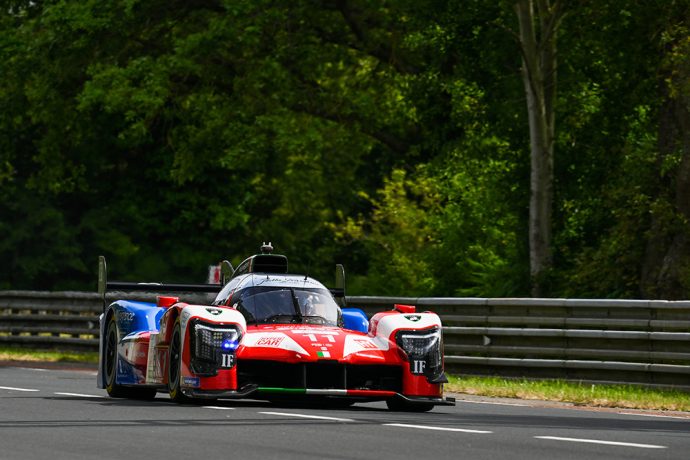
The car was designed and built by Michelotto at its headquarters, to LMH regulations with an HWA-designed and built internal combustion engine and a bespoke hybrid drive system driving through the front axle.
Isotta Fraschini also showed both a ‘Pista’ track-only version and a ‘Stradale’ road-legal car, too.
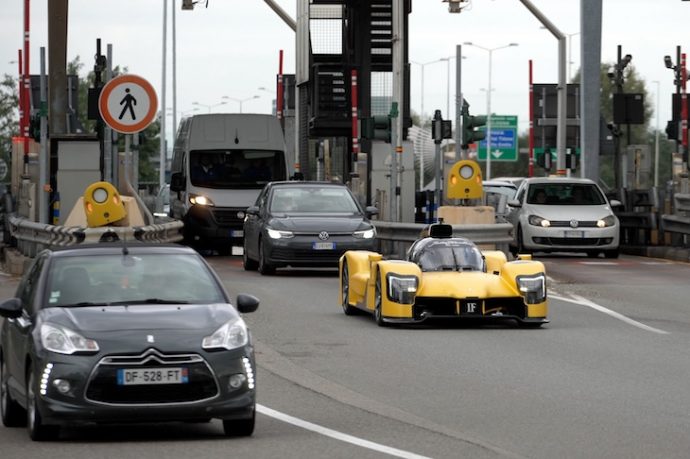
British team Vector Sport was initially appointed as service provider in the FIA WEC, having won the opportunity to do so against stiff opposition from JAS Motorsport, Joest Racing and Emil Frey Racing.
But that deal was sidelined after Duqueine Engineering made a counteroffer. The car debuted (with Duqueine support) at Qatar in 2024 with two young and inexperienced drivers alongside development driver Jean-Karl Vernay.
Thereafter, the car completed the European races and raced at Interlagos, showing flashes of potential but with no points-scoring finishes.
Despite public statements of the outfit’s readiness to commit to the new-for-2025 ‘two car rule‘, it became clear that the financial position for the effort was far from healthy.
The car was withdrawn from the remainder of the season, and despite efforts to find new sources of funding or to interest teams in purchasing the car, there is little or no prospect of a return to the FIA WEC.
Whilst the option to join the recently announced Pro-Am Privateer class in the Asian Le Mans Series offers a glimmer of hope, it is very far from a certainty.
Jaguar
Parent company Tata was involved in the initial industry round of technical meetings to develop the Hypercar ruleset, with Jaguar, the most prominent brand in its portfolio, stepping in.
That interest, though, was fleeting. No programme is live across the group.
JDC Miller
See Porsche.
Joest Racing
See Glickenhaus and Isotta Fraschini.
JOTA
See Porsche & Cadillac.
Koenigsegg
Christian von Koenigsegg spoke in the early days of the Hypercar regulations about the potential for his Swedish supercar company to take a look at the prospects for racing.
That has not progressed to a firm programme, but DSC did see an early road-car-based LMH concept drawing from within the company.
Lamborghini
The VAG-owned Italian supercar maker joined IMSA and the FIA WEC in 2024 after a test programme from Summer 2023, with a single factory-entered SC63 LMDh car featuring a Ligier chassis and powered by a Lamborghini-developed twin-turbo V8.
The factory team, supported by Iron Lynx / Prema, was entered for a full season in the FIA WEC Hypercar class and the GTP class for the IMSA SportsCar Championship’s Michelin Endurance Cup, both with a single SC63.
The effort doubled up for a two-car entry for Lamborghini’s first-ever top-class entry for the 24 Hours of Le Mans in 2024, scoring a top 10 finish, one of only three points finishes in the Manufacturers World Championship, with just two points finishes in IMSA, with a best of seventh at Sebring.

Poor form exposed developmental needs for the car after a rushed homologation process, following the team’s test car being destroyed in an early programme accident at Paul Ricard.
After initially indicating that the effort would return with two cars in 2025 to the WEC, unhappiness within Iron Lynx with issues affecting both the Hypercar and GT3 programmes, a change in senior management at Lamborghini, and the scale of work needed with the car saw the effort implode post-season.
Lamborghini would eventually opt for a single-car effort in the IMSA Endurance Cup only in 2025, as its regrouped, with a very late appointment of Riley Motorsports as a service provider and poor form at Daytona didn’t help matters either.
Add into the mix a currently ongoing legal case where Prema alleges that its proprietary software and set-up data were taken by Lamborghini and supplied to incoming service provider Riley, and it’s been a somewhat sticky wicket for the programme.
Senior management has indicated a potentially customer-led approach beyond the current season. There are signs that the development work required, primarily focused on weight reduction and a revised aerodynamic package, will be undertaken later this year, provided the board approves the necessary budget.
Lexus
Lexus has evaluated an LMDh project more than once for IMSA, but has repeatedly opted to stay with the GTD (and GTD Pro) platform with the incoming new car to replace the current RC F GT3.

DSC understands that Toyota in North America also at least considered a programme featuring a single GR010 LMH car, but this too was not progressed.
Ligier
Involved with the Peugeot 9X8 programme as a carbon fibre component supplier and aero design consultancy, the French chassis maker gained its first LMDh customer with Lamborghini, supplying the ‘spine’ for its 2024 SC63.
LMDh
LMDh (Either Le Mans Daytona Hybrid or Le Mans Daytona Hypercar, depending on who you ask!) is one of two separate technical rulesets that produce cars eligible for both the IMSA GTP and FIA WEC Hypercar classes.
LMDh was produced as the successor to IMSA’s DPi (Daytona Prototype International) class by IMSA, based around four available chassis/ spine suppliers (Dallara, Ligier, Multimatic and ORECA) that were initially intended to do double duty as the next generation of LMP2 chassis.
The latter plans were counted out in 2024 with a replacement ruleset for LMP2 from 2028 now established.
LMDh cars utilise a ‘spec’ hybrid drive system, with Bosch, Fortescue Zero, and Xtrac providing the key components for all LMDh cars’ hybrid drive systems.
The OEM concerned can then select the ICE (Internal Combustion Engine) of their choice, along with brand-specific aero and bodywork.
To date, Acura, Alpine, BMW, Cadillac, Lamborghini and Porsche have raced LMDh cars with Genesis arriving in 2026 and Ford and McLaren set to follow in 2027.
LMEM
Le Mans Endurance Management is a company set up by the ACO to operate and promote the FIA WEC as well as a range of other Series.
Based in Paris and Le Mans, and operating under CEO Frederic Lequien, it is tasked with organising the race meetings, developing calendars and rulesets, selecting competitors, communicating, promoting, managing logistics, and overseeing nearly everything else that goes into running a World Championship.
LMH
LMH – Le Mans Hypercar, is one of two different sets of technical regulations against which a car can be built to compete either in the FIA WEC or in the IMSA WeatherTech SportsCar Championship.
LMH cars can be standalone racing prototypes or derived from roadgoing ‘hypercars’; they can have hybrid or non-hybrid powertrains, and the hybrid can deploy on either the front or rear axle.
Chassis, bodywork, and powertrains can be built to order for the cars. LMH cars are not powered by the LMDH single-source hybrid powertrain.
Toyota (GR010), Peugeot (9X8), Ferrari (499P) and Aston Martin (Valkyrie LMH) all currently race cars to LMH specifications.
Glickenhaus (SCG007), Isotta Fraschini (Tipo 6 Competizione), and ByKolles/Vanwall (Vandervell 680) have all previously done so.
Lola
The revived Lola marque has expressed interest in a role in the top class (and LMP2), though how and when that might happen is not yet clear.
It is perhaps less likely to see a bespoke Lola chassis involved, but rather the company might seek a route into the market where it can work with multiple OEMs through its developments in advanced tech and design capabilities.
Lotus
Indications were that Lotus might be collaborating with Alpine on a Hypercar programme, which proved to be a false rumour. But the brand was in the mix when parent company Geely sat around the table for early industry meetings to determine the shape and direction of the Hypercar regulations.
Interest was understood to be defunct as of two years ago, but a lot has happened over the past 24 months. Could Lotus, or another arm of Geely, prove to be a prospect for the future as the expansion of Hypercar to the Asian Le Mans Series picks up steam?
Marelli
A key technical partner on Peugeot’s 9X8, Marelli provides the electronics and high-voltage electrical systems for Peugeot’s hybrid drive.
Maserati
Yet another Stellantis brand that is believed to have evaluated Hypercar. However, the Italian supercar maker decided to focus on a mix of Formula E and a GT2-spec MC20 instead.

McLaren
The ‘will they/won’t they?’ storyline around McLaren in Hypercar was finally progressed with the confirmation that the UK supercar maker will field a Hypercar entry in the FIA WEC.
That effort will commence in 2027 with an LMDh rules car based on a Dallara spine.
There’s still plenty to be announced about the effort, which has been rumoured, discussed, and speculated about almost since the LMH and LMDh regulations were unified.
It is well known that McLaren initially collaborated with ORECA on evaluating an LMDh car concept, which was completed at the same stage three years ago.
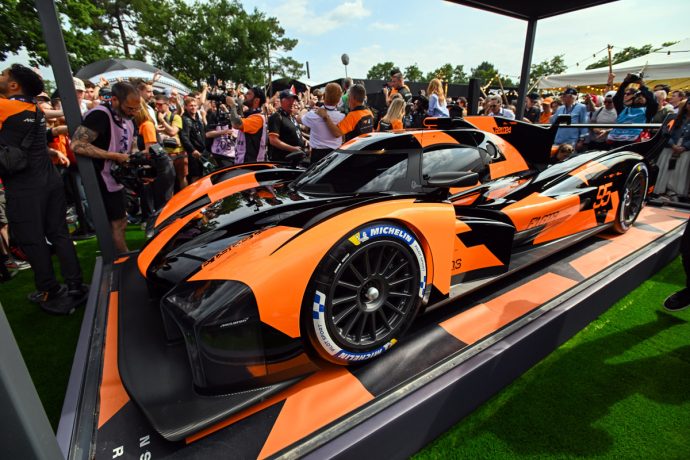
Also confirmed is that United Autosports will serve as the FIA WEC service provider, the cars set to be based at its Yorkshire, UK HQ.
The engine is set to be a McLaren-badged turbo V6, designed by McLaren and built by Italian outfit Autotecnica Motori.
Also, it is now clear that McLaren is looking to find private investors in the car ownership for its WEC programme, with a parallel programme featuring a track-only customer version of the racing LMDh car.
This programme offers owners access to the development of the race car, alongside curated and exclusive track days for their own track car.
Mecachrome
The French specialist engineering concern was responsible for designing and developing the 3.4-litre turbocharged V6 engine for the 2024 Alpine LMDh car.
Following reliability issues at its debut at Le Mans in 2024, the engine underwent revised management strategies for the remainder of the season.
Alpine then utilised one of its homologation EVO Jokers to update it for 2025, before moving the entire engine operation in-house post-Le Mans.
Mercedes-AMG
Despite numerous rumours of a racing version of Mercedes-AMG’s extraordinary, F1-powered AMG One supercar, no programme emerged.

That’s not the end of the story, though, as well-placed sources have consistently claimed that Mercedes-AMG has had discussions around a programme potentially targeting Hypercar and GTP, with opinions divided on whether the LMDh or LMH route is the favoured option.
Whilst the current Mercedes AMG Customer Racing operation has expressed no knowledge of such a programme, those same sources have insisted that interest from the brand is still active.
That leaves several possibilities aside from an unauthorised fishing expedition!
Is it possible that the parent Daimler Benz operation is in discussions, or is the somewhat more likely prospect that the standalone F1 operation is looking to follow Ferrari, McLaren, Alpine and Aston Martin down the road of retaining in-house technical capabilities within an F1 cost-cap?
Whatever the truth of the matter, DSC is sticking by its initial story that Mercedes-AMG has been actively evaluating an entry.
Meyer Shank Racing
See Acura.
Michelin
Tyre supplier for both the IMSA GTP class and the FIA WEC’s Hypercar class.
In WEC, the teams have two dry weather choices for 2025: Soft for average-wearing or ‘rubbered’ track surfaces, temperatures in excess of 15°C and Medium for abrasive track surfaces, demanding track configurations, temperatures in excess of 30°C.

In IMSA, meanwhile, only one compound is used at each event, except at Daytona, where two options are available, with one exclusively used overnight during the race.
Both championships have a single wet-weather tyre, with no intermediate option.
For 2026, an entirely new range of dry weather tyres is coming with higher proportions of renewable materials and better ‘warm-up’ qualities from cold.

The testing programme for those tyres is complete, and production is set to begin over the summer before testing with the frozen final specifications resumes in Q4 of 2025.
Michelotto
Previously involved in the Ferrari GT build programme, Michelotto became the primary technical partner for the Isotta Fraschini Tipo 6 LMH. The cars were being built at a dedicated facility within Michelotto.
Multimatic
The Canadian industry giant provides the ‘spine’ for the Porsche 963 (plus the now-defunct Audi) and delivered well over 20 such chassis for future customer orders, factory cars and spares within a year of the start of the 963 programme.
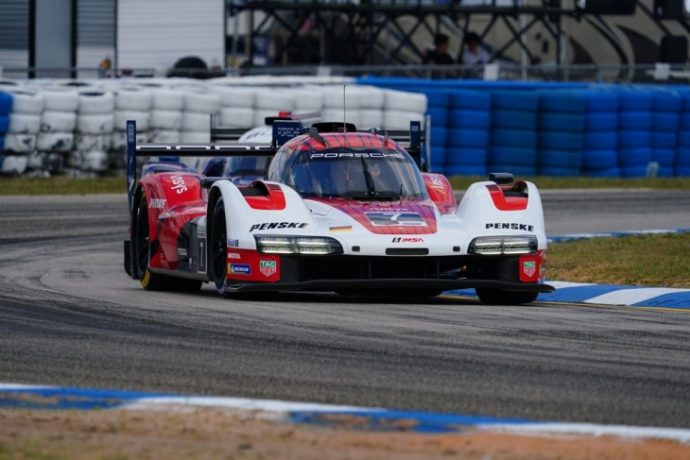
At least one of the now-dead Bentley projects would also have involved the Multimatic chassis.
Multimatic was also heavily involved in the original Aston Martin Valkyrie LMH programme and built the AMR Pro versions of the car, effectively, at least in part, a non-BoP’d version of the Hypercar project.
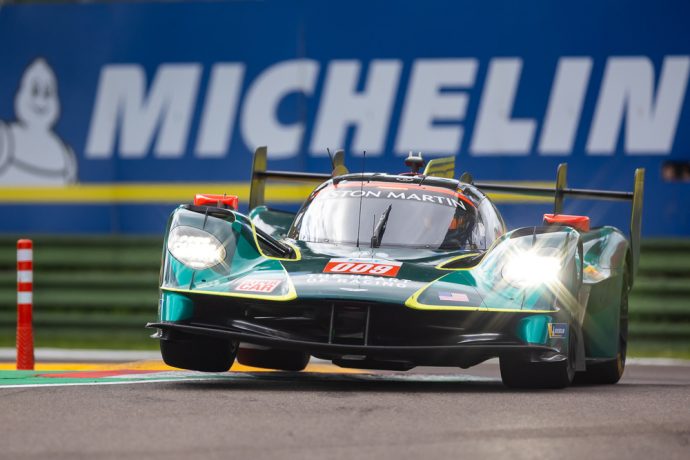
It also had a hand in the development of the current version of the Valkyrie LMH, with the in-house race team heavily involved alongside The Heart of Racing in running the cars in both the WEC and IMSA.


